Contents
PROPERTIES OF SPANISH BROOM
Medicinal properties of Spartium junceum
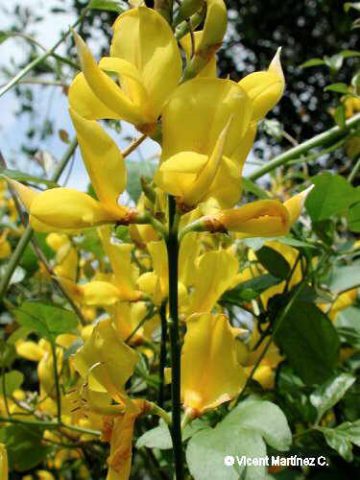 Spanish broom has been used as diuretic and laxative. Diuresis or water elimination of the body is produced by the action of scoparin on the renal mucosa.
Sparteine is used as a heart tonic, although the quantity of this product contained in the plant is so high, that Cytisus scoparius, with a lesser content, is being used instead.
Antidote against vipers. In some places in Africa the decoction of the peeled branches is used to counteract viper bites.
In high doses, this plant becomes very toxic by diminishing the pulse rate to such low levels that it can become lethal, so it is not advised to use this plant to prepare home-made remedies.
Industrial use of spanish broom
-Flowers of Spanish broom are used to produce yellow pigments.
– Fiber is made with its bark to manufacture ropes and clothes.
– Bees use its flowers to make honey.
Toxicity of Spanish broom
Extreme in case of going over the allowed levels.
Symptoms of poisoning with Spanish broom can cary depending of the ingested amount:
Vomiting, diarrhea, tachycardia, somnolence, painful breathing, lowering of heart pulse and death.

 More information on plants.