Contents
Health benefits of wild clary (Salvia verbenaca L.)
Characteristics of wild Clary
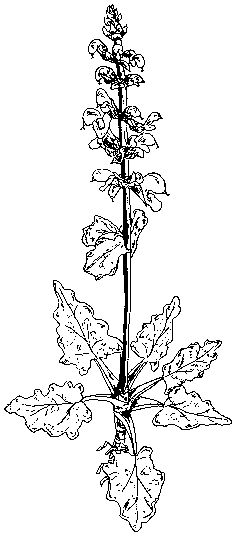
Picture of the plant. ©Dibujosparapintar.com |
Common noun: Wild Clary, Wild sage, Vervain sage
Scientific noun: Salvia verbenaca L.
– Synonyms: Salvia cleistogama Bary & Paul
Family. Mint family – Lamiaceae
Habitat: In woods, roads and dry grasslands
Description of wild Clary
Herbaceous plant up to 80 cm. tall. Glandular hairy stems. Basal leaves peciolate, oblong, lobed or irregularly toothed. Upper leaves smaller and unstalked. Flowers in verticils till 10, blue purple, till 1,5 cm long. Inflorescence shorter than in the other ” Salvias”. Calyx bilabiate, with a similar length to the corolla, downy and sticky.
Picking and storing: Leaves can be collected almost throughout the year. Fruits mainly at the end of Spring or at the beginning of Summer. Leaves should be dried in a dark place and keep them in a dry and airtight container.
PROPERTIES OF VERVAIN SAGE
Medicinal properties:
- Bactericidal: (Against any kind the breathing diseases: sore throat, influenza, etc.) Boil a spoonful of dry leaves and flowers per cup. Two cups each day.
- Cicatrizant and bactericidal: (ulcers and wounds) To heal the ulcers and wounds, supporting the cicatrization and preventing wounds to become infected. Compresses with the maceration of dry leaves in white wine or the green plant applied directly on the wound.
- Childbirth: Childbirth becomes easier if the expectant mother regularly takes an infusion of the dry leaves some time before giving birth.
But the medicinal property that has distinguished this kind of Clary from the other ones has been:
- Eye-wash: With its fruits people cleaned their sight. They used to put them under the eyelids and, by moving them, the eyes cleaned themselves of any kind of impurities.
Other sages:
 More information about medicinal plants.