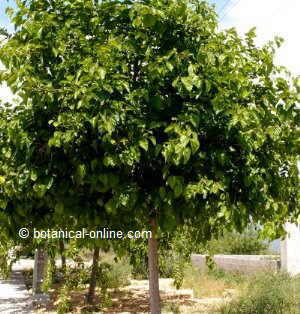
What is a common valerian plant?
Characteristics of common valerian (Valeriana officinalis L.)
Common noun: Common valerian, Garden heliotrope, Cat’s love catnip root (cats are said to like rubbing themselves in valerian. It is a stimulant and substitute for catnip. It produces effects similar to intoxication).
Scientific noun: Valeriana officinalis L.
Etymology: It is believed that the name valerian could derive from the Latin valere, which means “to be well” or “to be happy”.
Family: Valerian family -Valerianaceae
Habitat. Where does valerian grow?
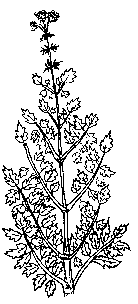
We find it in woods, riversides and humid grasslands.
Description of common valerian
Perennial herb till 2 m. tall.
Erect, robust stem, glabrous or pubescent, grooved.
Pinnate compound leaves. Upper ones with shorter stalk or unstalked.
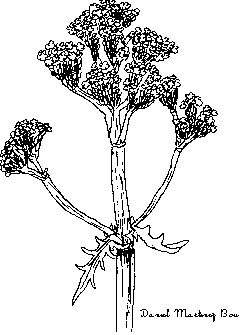
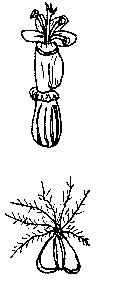
White or pink flowers clustered in flat inflorescences, a central one in a higher position than the two side ones. Tubular calyx till 2.5 cm. long.
The fruit is an achene.
Large, ovoid rhizomes, yellowish on the outside and white on the inside.
Active parts: The roots of the valerian plant.
Picking and storing common valerian
Autumn is the best time to harvest the roots of the plant, between late September and October, once the fruit has fallen and the plant is dry. Only harvest the rhizomes of plants older than 2-3 years. Do not harvest during rainy weather.
The roots should be cleaned carefully, taking care not to damage them, as the oils and active components of valerian are located just beneath the skin. Then, pat dry with kitchen paper and let dry in a dark, dry, and well-ventilated place. Infusions can be made with the fresh root, or it can be dried for later use. As the plant dries, its smell becomes more intense, sometimes reminiscent of the smell of feet.
Composition and active ingredients of valerian
Active ingredients found in the roots of the plant:
- Valepotriates or iridoids (1-5%): valtrates (valechlorin, isovaeroxyhydrin valtrate), didrovaltrates, and isovaltrates. During drying, valtrate decomposes into baldrin, also an active component. They have a muscle-relaxing effect. Valepotriates are degraded easily and are difficult to find in finished standardized products (tinctures, capsules, etc.). They are not found in products made solely with valerian essential oil.
- Essential oil (0.5-2%): alpha and beta pinene, borneol, eugenol, isoeugenol, cineole, camphene, valeranone, valerianol, valerenyl esters, valerenal, valerianic or valeric acid, valerenic acid, isovaleric acid, bisabolol, caryophyllene, valeranone, ledol, pacifigorgiol, patchouli alcohol.
- Valerian contains, although in low concentration, pyridine alkaloids (0.05-0.1%): actinidin, actinine, eschianthin, valerianine and valerine.
- Amino acids (arginine, gamma-aminobutyric acid or GABA, glutamine, tyrosine)
- Flavonoids: quercetin
Active ingredients of valerian
The calming and hypnotic effect of valerian root is due to the combination of all its components. It was previously believed that the components of the essential oil, or the valepotriates and their degradation products (baldrinal), were responsible for the sedative properties, but recent research suggests that it is the combination of all the compounds, and their different mechanisms of action—essential oil and valepotriates—that are responsible for valerian’s calming, sedative, and hypnotic medicinal properties.
Uses of valerian
This herb, which grows in forests and along riverbanks, is used as:
- Preparation of beverages: The essential oil of valerian root is used to flavor some liqueurs.
- Seasoning: The essential oil from the root of this plant is also used to flavor ice cream and dishes.
- As a medicinal plant
 More information on medicinal plants