Contents
What is a kermes oak?
Characteristics of kermes oak (Quercus coccifera)
Common Noun: Kermes oak
Scientific Noun: Quercus coccifera L.
Family: Beech family – Fagaceae
Habitat: In scrubs and dry places
Description of Kermes oak
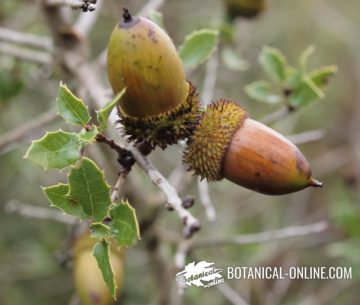
Perennial shrub of the beech family – Fagaceae – till 2 meters tall. Stems downy.
Undivided leaves a bit toothed, dark green, spiny edge. Young leaves show lighter green, white hairy beneath.
The fruit is an acorn with scales in its cup, ripening two years after.
Kermes oak galls to produce red dye
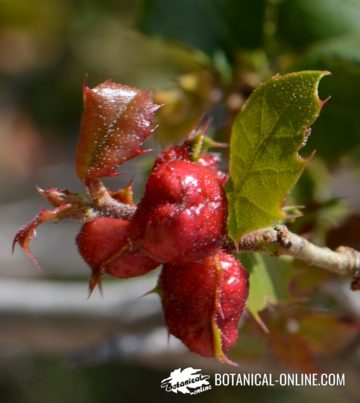
It is sometimes worth noting the presence of some wood like balls in some of the branches.
They are the galls, produced by the same shrub so as the insects lay the eggs into them. By this method, the plant preserves its own branches.
These excrescences are profited to produce red dye.
Picking and storing Kermes oak
Bark should be picked up in Spring, from trees about 15 or 20 years old. Acorns at the end of Summer or at the beginning of Autumn.
Composition: Active components of Kermes oak
Uses
- Animal feed: Acorns are used for livestock, mainly pigs and goats
- Natural dye: Traditionally, a black dye was obtained from the bark and a reddish-toned dye was produced from its acorns
- Fuel: Excellent quality charcoal is produced from its hard wood
- Gardening: Dense hedges are built with this species
- Medicinal
 More information on medicinal plants