Main pests and diseases of oaks
Main diseases of oaks
The main diseases that affect them are:

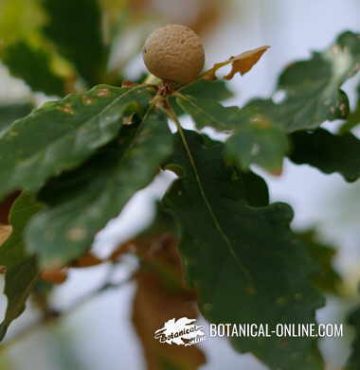
Oak gall Black rust: A disease characterized by the appearance of a black coating on the leaves. It occurs as a result of mold growing on the liquid produced by aphids or sucking sap scale insects. They must be fumigated with the right products for each of them which is practically impossible in the case of large trees.
- Anthracnose: A disease caused by fungus Apiognomia that affects branches and leaves when the weather is very humid. It produces light brown lesions on the midrib or sides of the leaves that can extend, which causes the leaves fall. Treatment requires the use of specific copper products and the destruction of contaminated leaves.
- Powdery Mildew: (Oidium or Uncinula) A kind of powdery mildew on the leaves, which causes the leaves to turn yellow and fall. This disease is caused by fungi when situations of moisture in the soil and air are very low. The solution lies in finding wetter sites and treat the plants with an appropriate fungicide.
- Nectria canker (Nectria galligena) A disease caused by fungi that attack wood producing cankers on the bark which eventually open. This results in an impossibility of sap to pass toward the external vegetative parts of the affected oak that eventually dies. It is caused by the infection of the plant with the mentioned fungus when the tree is pruned or because of wounds inflicted by frost or woolly aphids. The solution is to cut the affected wood and cover it with paint for tree cankers and treat the affected tree with an appropriate fungicide.
- Sudden oak death: It is a disease that affects oaks in United States although individuals with the same disease have already been found in Germany and England. It is produced by molds of the genus Phytophthora. The disease begins with the weakening of the young shoots, leaves turn brown and dry. The logs produce cankers that exudate. The plant dies quickly. There is no cure for this disease.
- Chalariosis: A disease caused by the fungus Ceratocystis fagacearum affecting mainly oaks. It affects the transport of sap which causes the death of the plant. Early symptoms affect the leaves that become yellow and fall. Treatment requires an appropriate fungicide and burning the affected trees. It is a disease that has not yet occurred in European oak but it is widespread in the United States.
- Chlorosis: It happens in oaks planted in areas with very high pH or highly compacted soil. This prevents the adequate absorption of minerals, especially iron which determines the leaves to turn yellow. The treatment involves the preparation of the terrain by means of soil removal or the application of suitable minerals. The latter is done by applying foliar fertilizers in several treatments, or the implantation in the wood of plastic capsules containing a ferric solution that will be absorbed by the tree.
- Root rot: This occurs in older oaks, being very difficult to diagnose because it is generally only seen when strong winds break down the diseased trees.
Main oak pests
- Gall wasps (Amphibolips and Diplolepis): They are Cynipidae insects that produce galls on any part of the tree. These are brown and have a diameter of about 1.5 cm. In general, they do not usually affect the tree. When they are very abundant they require specific treatment. Sometimes some of these galls may even be commercially interesting as those caused by Hymenoptera Cynips gallaetinctoriae used for the production of tannins.
- Lepidoptera: Many butterfly larvae feed on the tender shoots of these trees.
 More information on oaks
This article was endorsed by Julián Masats - Technical agricultural engineer specialized in horticulture and gardening.