Contents
Oleander properties
CHARACTERISTICS OF OLEANDER
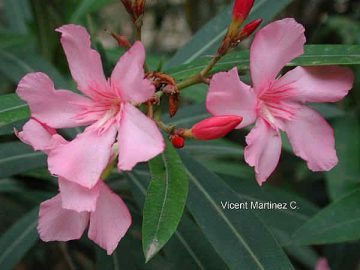
Scientific noun: Nerium oleander L
Family: Apocinaceae
Habitat: Europe and Asia (Middle East) but spread in many parts of the world as an ornamental plant. It grows in calcareous, sandy places exposed to the sunshine, specially in Mediterranean brooks, which remain dry most of the year.
Active components:Cardiotonic glycosides (oldendrine) prussic acid, rutin, etc.
Active Parts: Mainly leaves. In less quantity the whole plant.
MEDICINAL PROPERTIES OF OLEANDER
Medicinal uses of oleander
It has been used to extract oldendrine, for a medical usage a cardiotonic.
Home remedies with oleander: In home medicine it is no longer in use, save in certain African places where it is still being used a an abortive.
It was utilized in the past as a diuretic and cardiotonic.
Externally to fight scabies – a plaster of dry leaves mixed with honey- and skin diseases: eczemas, dermatitis, etc,
It has been thought to be a good remedy to relieve headache in cases of cold since it produces sneezing (by sniffing the powder of ground dry leaves and flowers)
Oleander as a gardening plant
Oleander is widely used as a gardening plant because of its beautiful flowers and because it stands dryness and pests very well. (How to grow oleander)
Toxicity of oleander
Toxicity of oleander is high.
Poisoning has occurred in children when they have eaten or chewed its leaves or stems. Also, just by being in contact with this plant, dermatitis can arise in some people.
There have been some cases of intoxication by roasting meat with the branches of this plant, because its poison is not destroyed either by the contact with the air or by heat.
Symptoms of poisoning with oleander
The main symptoms are: Digestive disorders with stomachache, vomiting, fever, weak pulse and heart attack.
 More information about plants.