Contents
Peyote tradition
When was peyote used for the first time?
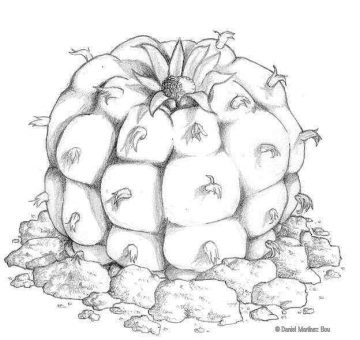
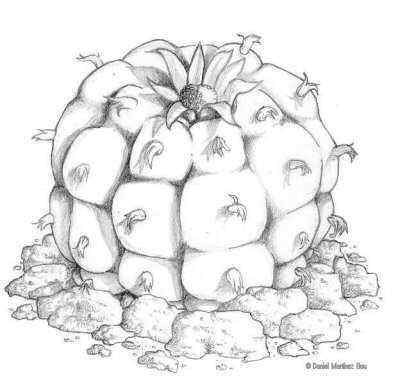
Although it is thought that the consumption of the peyote (Lophophora williamsii) began more than 2000 years ago, the first historical reference appears in the XV century from Sahagún’s writings who describes as this cactus, under the peiotl name, was used by the Chichimaca. This doesn’t mean that it was this tribe the one that exclusively used this drug in that moment or that they were who had discovered their use.
Probably in this time it was already used by most of the tribes that had the cactus near home. So the use of this plant in ritual ceremonies would have been the result of the contribution of all of them altogether.
When did peyote appear referenced in books?
In the XVI century it appears documented by the missionaries who write as the natives could resist the whole night dancing and how exhausted they were the following day after the drug stopped to make effect. The certain thing is that the point of view of the missionary settlers in America, with regard to the peyote, was always negative since they identified its cult as an enemy that was opposed to their beliefs. The real thing was that native, in most of the cases, stayed indifferent to the new religion. Under this point of view, it is not of extraordinary that this cactus was considered a malicious product, causing most of the wrongs of their users. While the Aztecs called it ” Meat of the gods”, the priests baptized it as ” Diabolical meat”, seeking to get rid of this this plant that was not abandoned in spite of the prohibition.
The first well documented approaches appear in the second half of the XX century, written by many anthropologists that were actively interested in the use of peyote, its importance among natives, and the ritual ceremonies that carried out their devote ones. In their chronicles they explain with detail as the Huichas accomplished an annual pilgrimage in search of the sacred cactus. They explain how during the road they carried out a series of rituals guided to get a purification previous to the acquisition of the cactus, under the supervision of the shaman. Among these rites, as very significant, we would have the public exhibition of the sins and the sexual abstinence.
Where is peyote used nowadays?
At the moment, similar rites are carried out by many tribes of United States and Canada. Among the first ones we would have the Kiowa, the Comanche, and many other tribes that inhabit the wide region that extends from the south of Texas, region of Big river, until the high plateau of the north of Mexico; the whole territory known by the name of desert of Chihuahua.
The ceremony is carried out around a great fire. The devote ones forming a great circle, they chew and swallow the cactus in a meeting that lasts the whole night under the hallucinogenic effects of the peyote. This was described by James Mooney in 1891 as the sensation of “alive arabesques”, according to his personal experience, making reference to the great profusion in ways and colors, produced, according to him, for the increment of the sensibility of all the senses but especially the visual ones, which Mooney defined as visual hiperestesia”. The same writer Aldous Huxley defines it as magnifier of the reality, with capacity of endowing the daily objects with beauty. Nevertheless, the unpleasant effects that take place after the initial euphoria, don’t compensate the hallucinogenic pleasures” (See toxicity)
Uses of peyote in the Native American Church
With the purpose of protecting the religious freedom, the Native American Church was founded in 1885, resulting from a mixture between the Christian beliefs and the native ones, based in the cult to the peyote. Their ceremonies are very abundant and in all them, although they differ from a place to another, the main principle is found: the consideration of this plant like the element of union between God and the Man.
Peyote has been defined in this sense as the door that would allow to break up with the matter and the rationality to elevate the conscience to a state that allows the union with the divinity. From another point of view, it is also contemplated like a way to get the cure of all illnesses, as the medicine that can gather the man with the wicked spirit that produced the illness. The confluence of these two ideas – religion and magic medicine – has produced the quick expansion of this cult that counts with more than 400.000 members.
 More information about plant cultivation.