Contents
Properties of dieffenbachia
Toxicity of dieffenbachia
Toxicity is medium. The toxicity of this plant is due to its content in calcium oxalates. (Theories exist on the presence of other components, as proteolytic enzymes that propitiate the histamine production)
Its sap is irritating because of the presence of oxalates that appears in form of crystals that damages the skin tissues by contact, when injecting this component.
Calcium oxalate has, also, emetic, irritating and inflammatory properties and it is, together with calcium, one of the main reasons for the production of kidney stones. Calcium and magnesium oxalates are two of the main components of poisonous plants.
Equally the ingestion of this plant produces irritation and inflammation of gastric mucous and it can damage the kidneys, the arteries, or the stomach of those who eat it.
| Being such a habitual plant in our homes, it is advised to be wise in its manipulation. It is convenient to use gloves when one has to cut a leaf and we should care to take it away from the reach of the small children to avoid any possible accident. |
Side effects of dieffenbachia
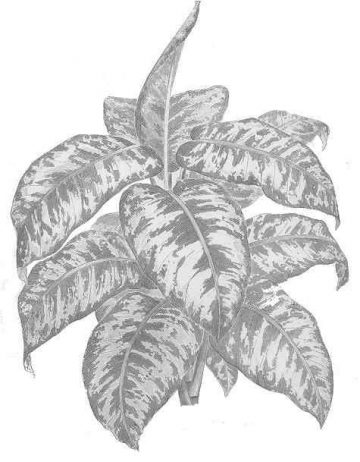
Poisoning with this plant shows the following symptoms:
- Applied externally: Dermatitis in the skin, with reddening, itchiness or burning pain. More serious symptoms can appear such as bladders or ulcers. In contact with the eyes, it produces irritation and transitory lost of vision.
- When its juice is ingested: It can produce vomits or diarrhea and even big inflammations of the digestive tract, especially in the mouth, the throat and the lips.
Among the most habitual symptoms we found: Swallowing difficulty, salivation, lost of sensibility with tingling sensation in the tongue, itchiness or ulcerations in the lips.
Consequences of eating dieffenbachia
A big ingestion of the plant, something which is not very habitual, can end up producing breathing difficulty. The quick action of the toxins of this plant usually propitiates its spitting what prevents the patient to continue chewing it.
The accidents are usually more common in children who chew the leaves, which produces a quick irritation with inflammation of the mucous membranes and a great salivation.
Although there have been describe some severe cases, it usually gives rise to very painful local inflammations that don’t usually affect to the circulatory system or respiratory tract.
How to treat dieffenbachia poisoning?
Dieffenbachia poisoning requires the following medical treatment:
- Mouth rinsing with plenty of water to eliminate the small pieces of the plant that could still remain in the mouth.
- Demulcents to alleviate the irritation and soothe the membranes.
- Immediate medical care with antihistamines and analgesics has to be applied.
Is dieffenbachia toxic to animals?
It is a plant whose ingestion is toxic for domestic animals. There have been registered many cases of intoxication with mortal result in dogs, cats, rabbits and canaries that ate it.
Symptoms in animals are similar to those produced on people.
Species of dieffenchabias
There are about 30 different species approximately. Among all, we would mention the following ones:
- Dieffenbachia seguine
- Dieffenbachia maculata
- Dieffenbachia bausei
- Dieffenbachia imperialis
- Dieffenbachia aerstedii
*Related information:
– Dieffenbachia characteristics
 More information about plants.