Contents
Characteristics of egg products
What are egg products?
Eggs are foods that last very short. To prevent eggs from spoiling, fresh eggs are subjected to various manipulations so that they become products with a longer shelf life. These products are known as egg products.
Therefore, we can say that egg products are products derived from eggs with more durable properties, capable of resisting the attack of microorganisms that could turn them into products dangerous for health, causing very serious infections such as salmonellosis.
Eggs intended for egg products
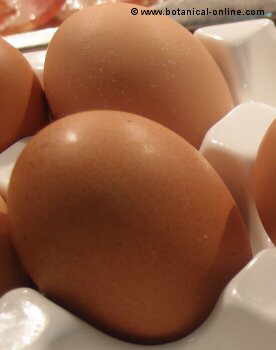 Eggs intended for the production of egg products are obtained from eggs of inferior visual quality (smaller, with a less accurate shell color, etc.).
These are the eggs that are included in the so-called category C, except for frozen eggs which belong to category B.
Although they belong to a lower category, from a food point of view, they have a completely normal taste, texture, smell, etc. and are equally suitable for consumption.
Main egg products
The main egg products are the following:
- Pasteurized eggs: These are eggs that have undergone a pasteurization process, which consists of applying heat to fresh eggs for a few minutes.
- Freeze-dried eggs: These are eggs that undergo a freeze-drying process, which consists of converting the egg white and yolk into powder. The process is based on the removal of water.
- Frozen eggs: These are eggs that have been subjected to a freezing process at a temperature between 0 and -2ºC. Temperatures above or below these values would would end up spoiling them.
Advantages of egg products over fresh eggs
Egg products, or treated eggs, despite being obtained from defective eggs, carry a series of advantages. Among all of them we can mention the following:
- They are more economical: their price is considerably lower than fresh eggs.
- They are easier to use: since we can find them in different physical states: liquids, evaporated (powder)…
- They are safer for the consumer thanks to the pasteurization process at low temperatures and for a long period of time, which prevents contamination and proliferation of pathogenic microorganisms that can cause diseases such as the well-known Salmonella.
- These are the only ones legally permitted in the restaurant industry: In fact, raw eggs cannot be used in any preparation for groups of people. In restaurants, bars, school cafeterias, etc., only the use of egg products is allowed. This guarantees food safety for the consumer, either through pasteurization, refrigeration, freezing, evaporation, or the addition of substances that have the same effect.
 More information on eggs