Contents
Health benefits of artichokes (Cynara scolymus )
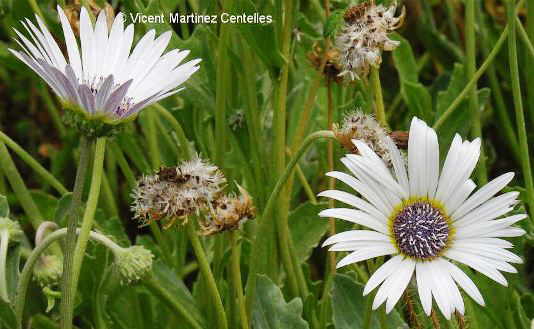
Detail of the plant with the flower |
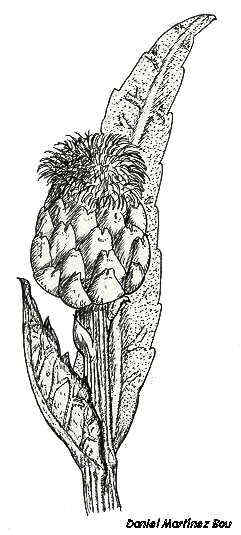
Characteristics of artichoke
Common noun: Artichoke, Globe artichoke
Scientific noun: Cynara scolymus L.
Family:. Daisy family – Compositae.
Habitat: Plant cultivated in many places around the world and very common in the Mediterranean climate, seldom naturalized
Description of artichoke
Perennial plant of the Daisy family – compositae – up to 2 m.
Pinnate-lobulate leaves, till more than 60 cm long. with lobes without prickles and tomentose below.
Noticeable head flowers, very big, till 15 cm, purple with ovate bracts. Edible floral receptacle.
Picking-up and storing artichokes
Artichokes must be harvested in spring, when they are tender. Artichokes leaves can be collected during all their production. They will have to be dried and kept in fabric bags in a fresh place, protected from dust.
Components of artichoke
- Acids: Caffeoylquinic and dicaffeoylquinic, caffeic, linoleic, oleic, panthotenic, etc. (Flower), ferulic (plant.)
- Vitamins: Vitamin B (Niacin, riboflavin,thiamin, pyridoxine)
- Pigments: Flavonoids
- Mucilage
- Inulin
- Minerals: iron, magnesium, phosphorus, potassium
MEDICINAL PROPERTIES OF ARTICHOKES
Internal use preparations with artichoke leaves, roots and flowers.
– Liver and bile: It protects the liver and it is and aid to its recovery in case of hepatic disease. It favors the biliary function. – The acids (caffeic, linoleic and oleic) take part in their hepato-protector power and caffeoyl-quinic-acid acid is the one that contributes to its choleretic value, it is to say the power of bile stimulation.
(Infusion of two spoonfuls of dry leaves by liter of water. Take three times a day before the meals.) (A preparation of juice of the mixed green leaves with wine can be used for the same purpose)
Liver drawing. Artichoke is a natural medicine for the liver and gallbladder |
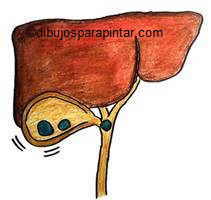
Cynarin, an acid present in leaves and seeds of artichoke, is one of the most beneficial ingredients to protect the liver and help heal any condition that might affect it: liver insufficiency, hepatitis, cirrhosis, jaundice, etc. (Infusion of artichoke leaves. Take a couple of cups a day. You can also use cynarin supplements that can be bought in pharmacies or herbalists).
Cynarin stimulates bile production, easing digestion, protects the body against microorganisms, and is also responsible to reduce cholesterol and triglycerides, to lower blood sugar and protect the kidneys. Because of its diuretic properties, it enters in many preparation aimed to diminish obesity or to get rid of fluids retention
Its protecting and recovering properties for the liver can be taken into account for chemical poisoning. (Infusion of two teaspoons of dried leaves per liter of water. Take three times daily before meals.)
– Cholesterol, hypertension, arteriosclerosis: Its main virtue is based on the capacity of its acids to reduce the level of cholesterol in blood, to diminish hypertension, and also to prevent arteriosclerosis, with which it diminishes the risk of vascular disease or aids to the recovery after some accident of this type, like myocardial infarction, angina pectoris, etc.
(Anyone of the previous preparations can serve to obtain these effects) Other vascular problems related with a bad peripheral blood flow, such as chilblains, can be treated in the same way.
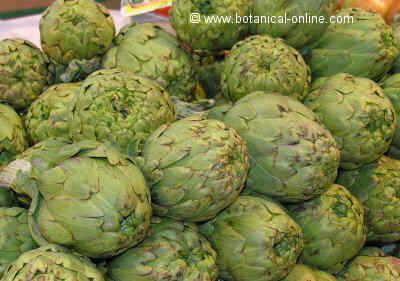
Artichokes in a market
– Diabetes: It reduces the level of sugar in the blood and prevents or aids to fight diabetes (Juice of the leaves mixed with wine) (Decoction of leaves until reducing the liquid to a half. Take a glass every day) (Eating raw or stewed artichokes)
– Diuretic: It favors the elimination of liquid in the body, reason why it is interesting not only in case of obesity, also in that assembly of ailments that improve with the water elimination and the consequent toxin elimination and specially the uric acid: circulatory, hepatic diseases, cellulite, gout, arthritis, etc. (Decoction of 60 gr. of dry roots by liter of water, until reducing the liquid to half. Drink 2 glasses a day)
– Anticancer: Recent studies have demonstrated the influence that acids caffeic and flavonoids have in the prevention or improvement of the cancerous processes.
Main curative properties of artichokes:
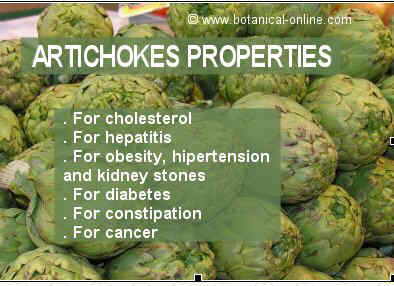
EDIBLE PROPERTIES OF ARTICHOKES
Edible plant: Artichokes are a very advisable food by all the properties previously mentioned. They should be eaten crude, in salad to take take advantage of all their properties. If they are boiled, it is interesting to drink the resulting broth to profit all their values.
The artichokes either in the oven or in the live coal in olive oil, are highly delicious and medicinal by the high content that oil and artichokes have in oleic acid.
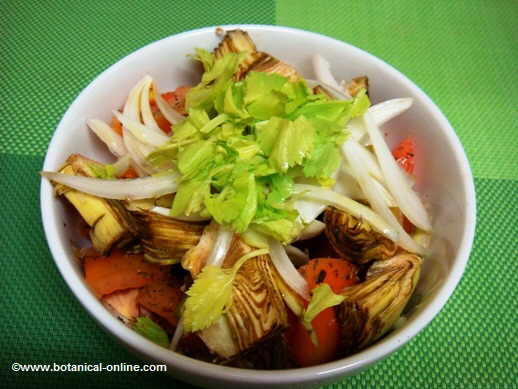
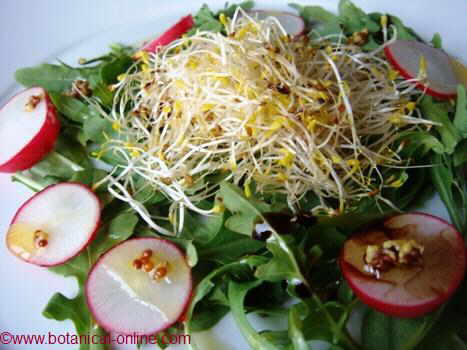
Raw artichokes in a salad
*More information about edible properties of artichoke in the listing below
Toxicity of artichokes
Although in no case they are toxic, it is not advised for suckling mothers to eat them, because its use entails the diminution of the production of milk.
 More information about artichokes.