Contents
What is a mandrake plant?
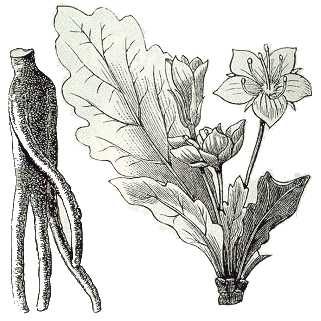
Characteristics of mandrake (Mandragora officinarum)
Scientific noun: Mandragora officinarum L, Mandragora autumnalis Bertol.
Common noun: Mandrake
Family: Nightshade family – Solanaceae.
Habitat: Waste rocky lands, generally under water in Autumn.
Alkaloids: Hyoscyamine, scopolamine, atropine and mandragorin.
Active parts: The whole plant, specially the root.
Medicinal uses of mandrake
Mandrake has been used with the following medicinal uses:
– Cough
– Asthma
– Hay fever
– Pain
– Scleroris
Given the toxicity of this plant, it is advised not to eat home-made preparations !!!
Edible properties of mandrake
The fruits are eatable when full ripe, but it is advisable not to eat many of them.
Toxicity of mandrake
Mandragora officinarum is very poisonous. Its toxicity is extreme in cases of plant ingestion.
Symptoms of mandrake poisoning
Eating this plant will lead to the following side effects:
– Vomiting
– Diarrhea
– Slowing of heart beat and death.
 More information on plants