Contents
What is a pansy plant?
Characteristics of pansy (Viola tricolor)
Common English name: heartsease, pansy, wild violet, love-in-idleness.
– Spanish: pensamiento, trinitaria, pensí, pincel, suegras y nueras.
Scientific name: Viola tricolor L.
Family: Violaceae – Violet Family
Origin: England
Habitat: uncultivated land, fields, etc. In gardening hybrid varieties are grown for ornamental purposes.
Pansy description
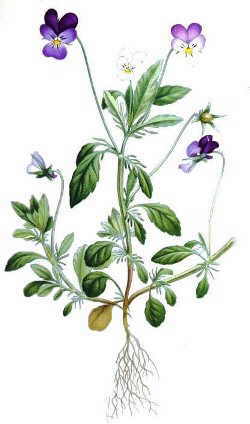
Annual or biennial plant with a woody stem 10-20cm. high.
Shaped leaves with toothed margins and long petiole (with stipules), which is narrowing in the upper leaves.
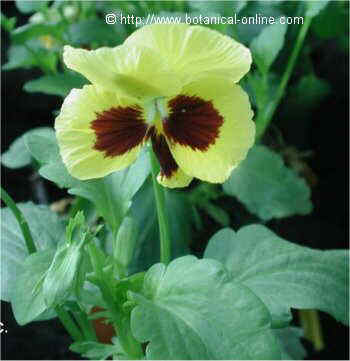
Flowers stalked, axillary and large size. Calyx with 5 sepals and 5 petals separate and unequal. The petals are white, yellow or purple, or a combination of the three colors (hence the name Viola tricolor).
Plant composition
The composition of the pansy is as follows:
- Rich in mucilage (15%): arabinose, xylose
- Vitamin C, alphatocopherol, beta carotene
- Salicylic acid (0.060.1%) and salicylates (violutoside, gaultherin, methyl salicylate)
- Caffeic acid, coumaric, gentisic, protocatechuic
- Flavonoids: rutin, violanthin, scoparine, scopoletin, myricetin, quercetin, vitexin, carotenoids (xanthophylls as violoxanthin)
- Tannins (2.5 to 4.5%)
- Bitter principles (saponins): violin (roots) (with emetic properties)
Used parts of pansy
– The entire plant when it blooms in summer.
Uses of pansy
This plant, typical from uncultivated land and crop fields, is used as:
- Edible plant: The flowers are used in salads. Its leaves and flowers can be eaten raw or cooked.
- Condiment: This plant is part of some sauces.
- As a medicinal plant
 More information on the pansy