EGG TEST TO CHECK FRESHNESS
How can you tell if an egg is fresh?
 There are a series of tests that allow us to know the freshness of the eggs. Among the best known are the following:
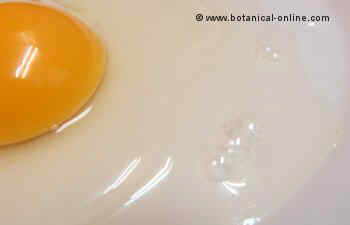
- Fresh eggs have large yolks and thick whites. As the yolk loses freshness, it decreases in size, and the white becomes less thick and less sticky. If, upon cracking an egg, the white and yolk are mixed together, it is because the egg is in poor condition. We must not eat it.
- Fresh eggs don’t float: Put a raw egg in a bowl of water. If it floats, we must discard it, because it means the air cell is very large and will not be fresh. The inner size of the egg’s air cell, that is, the space occupied by air, is larger as an egg loses freshness.
In order for a fresh egg to float, we must add salt to the water. This increases the water’s density and makes the egg weigh less compared to the salt water and can float. However, in “normal” water, a fresh egg has more density than water and will never float.
- Fresh eggs don’t smell bad: When we crack an egg, we must smell it before using it. Fresh eggs smell good. If an egg smells bad, it’s because it’s not fresh. Therefore, we must reject it.
- The inside of a fresh egg barely moves when you shake it: When we shake an egg gently, we notice that the inside hardly moves. If the inside moves, it’s because the air cell has become larger, meaning the egg has lost freshness.
- A fresh egg should not have spots or blemishes inside when you look at the light: We will place an egg in front of a powerful light and look at it against the light. If it has spots, it’s because it is not good. It’s best to discard it.
- Fresh eggs have the yolk in the center: We will crack an egg and check that the yolk is in the center, surrounded by the white. As the eggs lose freshness, it shifts to one side.
 More information on eggs
This article was endorsed by Elisenda Carballido - Dietitian nutritionist. Postgraduate in Phytotherapy and master in Nutrition and Metabolism.