Health benefits of mallow (Malva silvestris L.)
MEDICINAL PROPERTIES OF MALLOW
Mallow to cure wounds, eczema and other skin disorders
The healing properties of mallow are vast. Since this is a very common plant, it is available most of the time to use it as a natural remedy
 Emollient: In front of pimples, blisters, furuncles, seborrheic dermatitis, eczema, injuries, ulcers or whatever skin affection, the mucilage of this plant will be suitable as a softener.
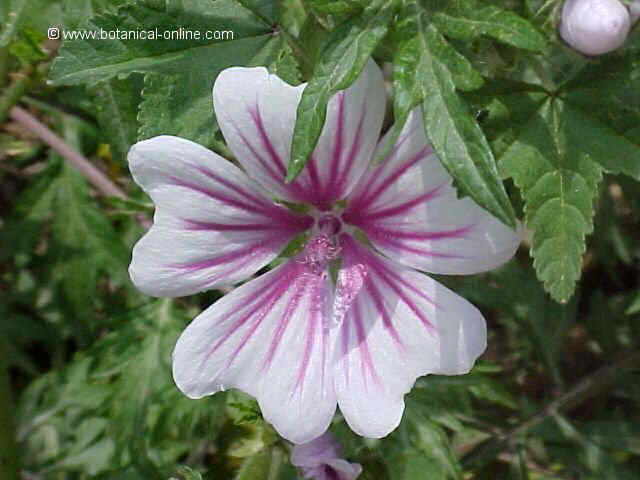 Emollient: In front of pimples, blisters, furuncles, seborrheic dermatitis, eczema, injuries, ulcers or whatever skin affection, the
 (Cataplasm with the smashed tender plant over the skin) (In case of eczema or pustules it is very convenient to apply a cold compress soaked into the decoction of a handful of dry leaves per litre of water)
It can also be used for mouth sores or gingivitis (rinses with the decoction for 10 minutes a teaspoon of flowers per cup of water.) (Mixed infusion of mallow and thyme, make mouth rinses)
- Pyorrhea: (Mouthwashes with the decoction during 10 minutes of a teaspoon of flowers per cup of water.)
Mallow for breast inflammations
- Anti-catarrhal, anti-tussive, pectoral: In respiratory diseases: cough, cold, sore throat, bronchitis, sinusitis, pain in the breast, aphonia, wheezing, etc. its properties soothe respiratory tracts. (Gargles with the decoction of dry leaves and flowers for sore throat.)
- Pain in the breast: (Infusion for 10 minutes of two spoons of dry leaves for each glass. To increase its emollient properties it can be taken with honey) (Infusion for 5 minutes of a tea spoon of flowers with two leaves of eucalyptus. Against coughing.)
Mallow for digestive system inflammations
- Mouth inflammations: (Mouthwashes with the decoction for 10 minutes of a tea spoon of dry flowers per glass of water)
- Stomach irritation: In stomach irritation, the mucilages of this plant help reduce the stinging sensation. (Take a couple of cups a day earlier decoction)
- Varicose veins: (Infusion of a spoonful of flowers and leaves per cup. Two cups a day)
- Constipation: (Decoction for 20 minutes of 30 gr. of dry leaves and flowers per litre of water. Drink 3 glasses every day.)
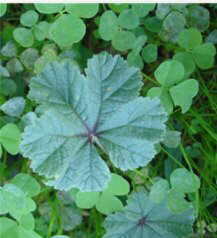 | Main properties of Mallow Very rich in mucilages The pasters are emollient Infusions for dry cough Edible wild plant To avoid constipation |
Edible properties of mallow
Common mallow can be used as food. It is know since historical times, since it was used by The Greek and The Roman, who ate it with profusion, mixed with other vegetables.
Apart from the medicinal properties seen above, it is a plant very rich in vitamin A, Vitamin B, Vitamin C, and vitamin E.
Cosmetic properties of mallow
Because of its emollient properties, it is very used in cosmetics. Many facial tonics can be made from it:
- Compresses for the face with the decoction of a handful of dry leaves per litre of water.
- A skin tonic with the broth coming from boiling some dry flowers in a litter of water.
Toxicity, contraindications and side effects of mallow
In appropriate doses, it is not mentioned any toxicity, side effects or contraindications in the use of this plant.
 More information about mallow properties.