Contents
What is a willow?
Characteristics of willow (Salix alba)
Common noun: White willow, Golden willow
Scientific noun: Salix alba L.
Family. Willow family – Salicaceae
Habitat: By the side of the rivers, channels and woods of humid climate.
Description of willow
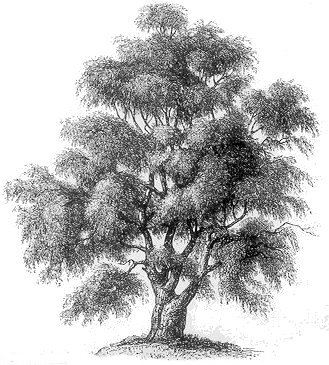
Perennial tree of the Willow family – salicaceae up to 25m.
Erect stems, dark grayish. Young branches silky.
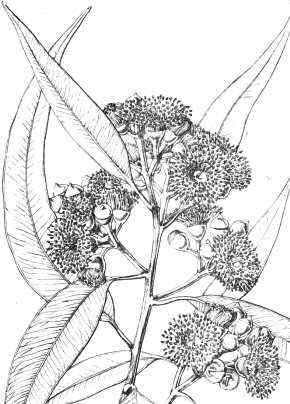
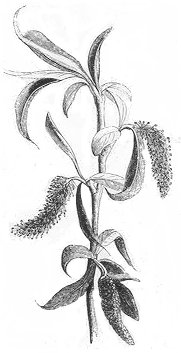
Grey silvery leaves, serrate, till 10 cm long, covered with soft hairs on both sides.
Flowers in catkins; male ones, cylindrical, yellow till 8 cm; female ones, till 6 cm, green at the beginning but becoming white when full of seeds.
WHITE WILLOW (Salix alba L.)
Picking-up and storing willow
Either the bark, the leaves or the flowers will be picked up in spring. The first one should be dried in the sun and the rest in the shade. its bark should be obtained from branches a couple of years old and they can only become powdered before being used.
Components of willow
- Fenolic glycosides: Salicin is the most important with many properties such as analgesic, anti inflammatory, sedative, antirheumatic, antipyretic, anti gout and digestive. Some other glycosides are vimalin, triandin, fragilin, saligeni, etc.
- Catechin tanninsod (bark)
- Estrogens
- Rutin (bark)
- Fiber ( bark): Lignin (wood)
- Tannins
- Acids: ascorbic (bark), salicylic (leaves) and p-coumaric (plant)
- Minerals: Potassium, phosphorus, calcium, iron, cobalt, aluminium, magnesium (bark)
- Vitamin B1, vitamin B2 (bark)
 More information on medicinal plants