Contents
MEDICINAL PROPERTIES OF SPURGES
Toxicity of spurges
Toxicity of spurges is high. It affects mainly to the digestive apparatus, to the kidneys and the liver, producing considerable irritations in people that ingest the latex, being able to be deadly if the ingested quantity is high.
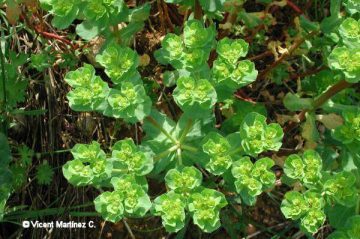
The contact of the latex with the skin produces a very strong reddening in the skin (rubefacient) with strong appearance of bladders (vesicant), properties that were considered as advantageous to externally treat rheumatic pains of all type.
Side effects of spurges
Poisoning with this plant shows the following symptoms:
- Internal remedies: Internal preparations with spurges leads to digestive disorders, such as stomachache, nausea, vomiting that can go together with blood, diarrhea, breathing difficulty and heart failure.
- External use remedies: The contact of some preparation from spurges with the skin can produce dermatitis as a result of being in contact with the plant or because of prolonged exposure to the sun after having been in contact with the juice, so its latex should be avoided, specially to the eyes to avoid ocular irritations, even blindness.
Medical treatment of spurge poisoning consists on: Emetics, gastric lavage and emollients administration.
Are spurges toxic to animals?
There have been some cases of animals being intoxicated when eating grass that contained dry spurge. Recent investigations suggest that there are possible indications that animals that have been fed with forage containing plants of the gender ” Euphorbia ” can bear a risk of transmitting possible tumors to the humans that feed on them, because of diperten toxicity.
Given the toxicity of its components, its use is dissuaded in home-made preparations.
 More information about plants.