Contents
Dangers of savin
Dangers, risks and toxicity of savin
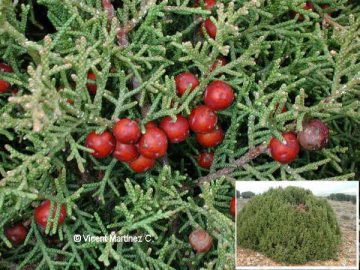
Extreme. – the same consideration deserves the species Juniperus virginiana L. and Juniperus thurifera L. in the event of ingestion of the essential oil the consequences are dramatic, if lethal doses is ingested. The quantity is estimated for the humans in approximately a gram or 5 or 6 drops of essential oil.
Side effects of savin poisoning
The ingestion of the essential oil or the bark as abortive has proved to be deadly many times. The same result has taken place in goats or cows that have eaten this plant, producing them, not only the lost of the breeding, but serious lesions in the kidneys and in the digestive apparatus.
Similar abortive properties have been discovered in animals that ate the tender buds of the common juniper (Juniperus communis) or the needles of certain species of pines, as Pinus ponderosa and P contorta, taken place by the action of the isocupresic acid, especially in the last three months of gestation.
When applied externally, the essential oil or even the contact with the leaves, whole, mashed or crushed, in smaller dose irritates the skin, and, in higher doses, they produce bladders. The essential oil, used internally, produces irreversible lesions in the digestive and urinary apparatus, with necrosis of the kidneys in many cases.
The pollen of this plant has equally been proven to be toxic for the bees. In the same way, the honey obtained from its flowers should not be dedicated to the human consumption by its possible toxicity.
Symptoms of savin poisoning
In minor doses irritation of the mouth, diarrhea, vomiting, pain in the stomach, colic.
In higher doses, the results are fatal in 50% of the cases, some hours after having ingested the drug or in the interval of one week, with increase of the heart pulse, difficulty in breathing, cramps and paralysis of the central nervous system, coma and death.
The same considerations could apply to the North American species Juniperus virginiana L., which can be found cultivated in many gardens, and the species Juniperus thurifera L., which appears in colder climates with calcareous soils.
 More information about plants.