Contents
What is a hyssop plant?
Characteristics of hyssop (Hyssopus officinalis)
Common English name: Hyssop
Scientific name: Hyssopus officinalis L.
Family: Labiatae (Lamiaceae)
Habitat and distribution: Mediterranean plant naturalized in Europe. Originally from calcareous soil of Mediterranean forests, rocky thickets or mountainous arid and sunny areas. From 0 to 2,000m. altitude.
Description of hyssop
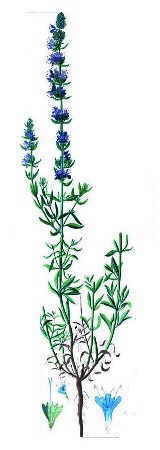
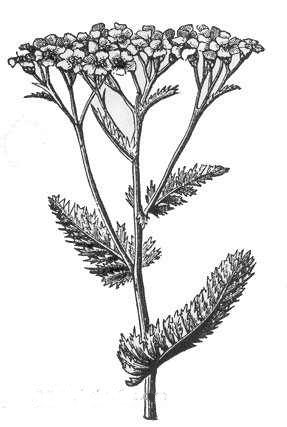
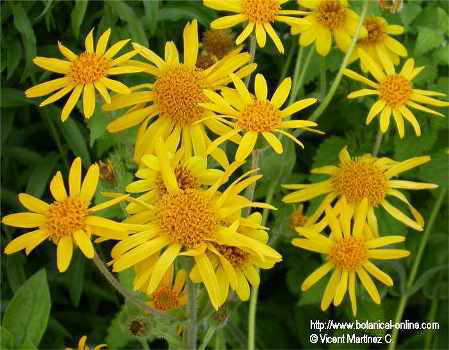
Botanical illustration of a hyssop plant
Aromatic perennial plant of Labiatae family, up to 70cm high.
Erect, quadrangular, woody and sessile stem.
Opposite, lanceolate or elliptical leaves.
Flowers in inflorescences of terminal spikes. The lipped flowers can be blue, purple or white pink.
Tetra-achene fruit with black seeds inside.
How to collect hyssop
Hyssop harvesting is done between August and October, when the plant is in bloom and has a higher amount of essential oil (maximum period of balsamic essence).
It must be cut with the help of clean scissors 15 cm above the plant to ensure its survival. Dry in a dark, dry and ventilated place for 15-30 days.
Harvested morning plants have more essential oil than those harvested the afternoon. The varieties with the highest proportion of essential oil are blue flowers (1-1.5% essential oil), followed by pink varieties (0.8%) and white (0.5%).
Composition of hyssop
- Essential oil (0.3 to 1%): In leaves and flowers. The main component is pinocamphone (50%) and thujone, two terpene ketones with psicoanaleptic effect (nerves stimulating).
- Other components of essential oil are: isopinocamhone, pinocarvone, pinene alpha and beta (14%), camphene, linalool, cineol, pinocamphol, myrcene, estragole, limonene, sabinene.
- Marrubiin: Lactone with fluidizing effect for bronchial mucus. Its use can cause irritation of mucous membranes, so it should not be used in case swollen bronchi.
- Acids: Rosmarinic or labiatic acid, ferulic acid, oleanolic acid, ursolic acid
- Flavonoids: Diosmin (The swab is the richest plant in this flavonoid with antiinflammatory properties), hesperidin, tannins.
 More information on hyssop