Contents
MEDICINAL PROPERTIES OF HYSSOP
INTERNAL USE REMEDIES WITH HYSSOP
Uses of hyssop as a medicinal plant
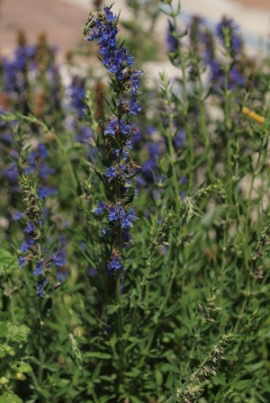
Photo of a hyssop plant
Hyssop (Hyssopus officinalis) is a medicinal plant that belongs to the same family as tarragon, sage or rosemary.
Traditionally, this plant has been used for its antibiotic, and digestive properties and to treat respiratory symptoms related to excess mucus, such as loaded chest and coughing.
- Natural antibiotic: Hyssop may help fight certain infections caused by microorganisms. Its essential oil is antimicrobial and has proven its effect against certain bacteria. This explains its traditional use in the treatment of respiratory infections. (Infusion: 1 teaspoon of flowering tops per cup of water, 3 cups a day)
- Respiratory diseases: Hyssop has mucolytic properties, very suitable to fluidify the bronchial secretions or mucus and facilitate its expulsion. This is because the hyssop essential oil is removed through the airways, exerting its effect on respiratory system.
It is considered to have properties to dissolve secretions, while its expectorant properties help these to be expelled. Hyssop also provides its antiinflammatory, antitussive and antibiotic properties to treat colds, coughs, inflamed tonsils, etc. (Infusion: 1 teaspoon of flowering tops per cup of water, 3 cups a day)
However, its active component, marrubiin, can be irritating to the bronchial mucosa, so that the plant should NOT be used when there is inflammation (bronchitis, pharyngitis, etc.).
- Digestive properties: Traditionally, hyssop has been used as a digestive plant, to avoid heavy or slow digestion.To stimulate digestion and as a carminative for removing gas secretions or flatulence. (Infusion: 1 teaspoon of flowering tops per cup of water, 3 cups a day)
- Emmenagogue: The essential oil of hyssop has emmenagogue properties to stimulate uterine emptying when there are problems of amenorrhea. (Infusion: 1 teaspoon of flowering tops per cup of water, 3 cups a day). It is NOT suitable if heavy menstruation, endometriosis or pregnancy.
- Intestinal worms: Traditionally it has been used as an anthelmintic remedy against intestinal worms. (The same previous treatment)
- Varicose veins: Hyssop preparations tone veins which promotes blood circulation, being effective in treating varicose veins (Infusion of 1 tablespoon of dried plant per cup of water, 3 times a day)
EXTERNAL USE PREPARATIONS WITH HYSSOP
- Injuries: External washings with infusions of hyssop accelerate wound healing. (30g. Of flower tops per liter, soak a compress and apply on the wound)
Is hyssop safe?
Hyssop essential oil is toxic. It must Not be used internally. Improper use of the plant or its essential oil can produce unwanted side effects.
Hyssop has some significant drawbacks, including the restriction of use to people with epilepsy and schizophrenia.
Contraindicated in pregnancy and during lactation.
Edible uses of hyssop
Hyssop is used as an aromatic herb, to season the dishes. It can be used fresh or dried in vinaigrettes, soups, pickles, homemade pizzas, or other food preparations. Its flavor is very aromatic, like sage or mint.
Hyssop flowers are edible. Both, flowers and leaves, can be added to salads of wild plants.
 More information on hyssop.