Contents
- 1 Nutritional properties of chard
- 1.1 Chard is very rich in betacarotene
- 1.2 Chard are very antioxidant
- 1.3 Chard also have a lot of vitamin K
- 1.4 Chard are very good for pregnancy
- 1.5 Chard are rich minerals
- 1.6 Other important minerals in chard
- 1.7 Chard are high in calcium
- 1.8 Another very interesting mineral in chard is potassium
- 1.9 Chard contain very high levels of magnesium
Nutritional properties of chard
Chard is very rich in betacarotene
Chard contain very high amounts of vitamin A. They are only surpassed by other vegetables (greens, spinach and watercress) and some vegetables (carrots, onions or peppers) Chard, like spinach or other dark green vegetables, are rich in beta carotene, a component that, once within the body, is transformed into vitamin A.
This vitamin is commonly known as “vitamin of sight” because their presence in the body ensures good eye health. Eating plenty of chard helps to prevent or even cure many eye diseases and vision loss, night blindness, cataracts or glaucoma. It also helps the eyes to overcome bacterial infections such as conjunctivitis.
Vitamin A also helps in strengthening the immune system, being stronger against infections and against infectious diseases of the respiratory system as sore throat, flu, colds, pharyngitis, sinusitis, bronchitis. The presence of this food on the table will also promote the health of the hair, skin or mucous membranes.
Our skin will gain in brightness and freshness and chard will keep our hair stronger. Vitamin A helps in preventing dry skin, healing wounds or other skin imperfections. This food is appropriate to prevent or improve certain skin ailments like eczema, acne, psoriasis, dry skin, herpes, cuts, wounds, burns, etc.
Chard are very antioxidant
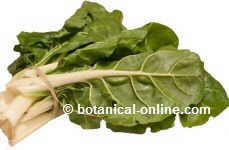
But among the most important functions of vitamin A are its antioxidant properties, ideal for eliminating free radicals which high presence in the body may be responsible for many degenerative diseases.
It has been shown that cultures that eat foods rich in antioxidants have a better health status.
Do not forget that in addition to vitamin A, chard have a good amount of vitamin C, and more modest figures of vitamin E, two antioxidants that help keeping us young and strong for longer.
Chard also have a lot of vitamin K
Chard are also very rich in vitamin K, which is necessary for blood clotting and the maintenance of bones. Eating chard can help make bones stronger and prevent injuries from bleeding for a long time and prevent the apparition of bruises.
Chard are very good for pregnancy
Besides calcium, chard contain high levels of folic acid or vitamin B9. This vitamin is necessary for the fetus to develop normally. Folic acid is needed to prevent neural tube defects, which will eventually become the central nervous system (brain and spine)in the developing fetus.
Folic acid is also involved in the functioning of cells, both in what is called hematopoiesis (blood cell formation) and DNA synthesis.
Chard are rich minerals
MORE IRON THAN SPINACH |
| Although spinach has a reputation for carrying a lot of iron, in fact chard contain more iron than spinach. Eating these vegetables will help to overcome problems of physical weakness due to lack of iron and it is interesting in certain conditions, when an extra intake of this mineral is required. |
Other important minerals in chard
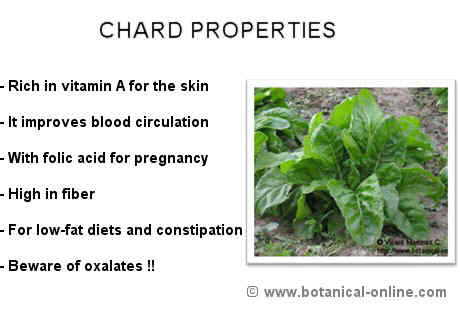
Main curative properties of chard
Besides a lot of iron, chard also contains:
Chard are high in calcium
Calcium are very useful in the formation of bones and teeth and very necessary in the prevention of osteoporosis. Young people should include regularly this food in their diet to achieve harmonious growth. Older people should also include them to strengthen their fragile bones.
Not less important is this vegetable for sportsmen, because calcium helps in preventing cramps in the calves which tends to happen quite often in football players, for example. Pregnant or nursing women should include this vegetable in their meals because they need an extra injection of calcium, to which this food can contribute.
Another very interesting mineral in chard is potassium
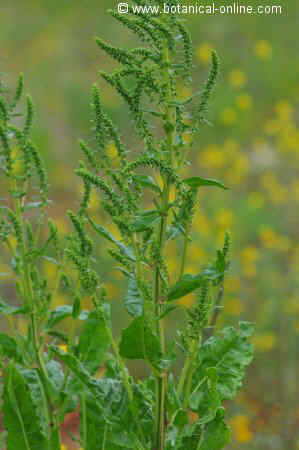
Chard contain significant amounts of this mineral. Potassium helps to establish the body’s water balance, counteracting the sodium. Eating chard will help to eliminate liquids and therefore help in the diet of those people who have problems with obesity or fluid retention.
We must not forget that chard contain more than 90% water and very few calories, and thus these represent an ideal food for those who are dieting to lose weight. Combining chard with potatoes is a good way to enhance diuresis because both foods are rich in potassium and because both can satisfy the hunger for a long time without having to resort to other caloric foods. The combination of boiled chard and potato results in a nutritious and healthy dish.
The green color of this vegetable indicates that these plants are rich in chlorophyll, in which composition enter the iron and magnesium. The importance of iron in the prevention of anemia is a fact recognized by everybody.
Chard contain very high levels of magnesium
This mineral is essential for the health of the body as it is involved in many functions. Together with phosphorus and calcium, it is involved in bone formation.
It helps to improve circulation, to prevent hypertension and blood clots in the arteries that are responsible for most heart attacks. It is even believed to help in regulating the level of blood sugar so it could be interesting for people who suffer from diabetes and are not insulin dependent. 200 gr of chard provide ⅓ of the daily requirement of this mineral. It is also believed that this mineral has antiinflammatory, antiarthritic, relaxing and antidepressant properties.
Its use in depression, headaches, or migraine help in improving these conditions.
 More information on chard