Contents
MEDICINAL BENEFITS OF CASSIA
MEDICINAL PROPERTIES OF SENNA
Cassia angustifolia tea
A plant to treat constipation problems
Senna belongs to the group of stimulant laxatives and cathartics, within which we have other plants with similar properties as rhubarb, cascara sagrada (Rhamnus purshiana) or alder buckthorn (Rhamnus frangula).
This type of laxative plants act on the intramural nerve plexus or set of nerves that control muscle movements of the intestine, which causes increased peristalsis (peristalsis are intestinal contractions that aim to expel the stool)
Peristalsis produced by this type of laxative is due in part by increased production of mucus in the intestinal wall and, moreover, by a greater accumulation of fluid in the intestine. This promotes the evacuation of accumulated feces in the intestine.
The components that trigger these processes are the anthraquinones (mainly sennosides, aloe-emodin and rhein) from which Alexandrian Senna (Cassia acutifolia) is the species with the highest proportion and the one with the most potent laxative or purgative effects.
How should we take senna?
Although the leaves or pods of Cassia can be infused, the most common way is to take a preparation which is sold commercially. It is a plant with a very bitter taste and also, when taken alone, it usually produces cramps or abdominal discomfort. This determines that it is not often used alone, but it becomes part of many laxative preparations together with other herbs.
Typically, such preparations usually contain peppermint leaves, fennel, ginger, bits of orange peel, coriander and other natural products to provide it better taste and relax the intestines, thereby decreasing the likelihood of adverse effects.
The most common is to take the preparation, according to the instructions of the prospectus, before going to sleep, to get the results the following morning. Although the effects of this plant are highly dependent on each person, they may appear between 4 and 12 hours after ingestion. The anthraquinones are eliminated in the urine, which can tinge it yellow or red brown.
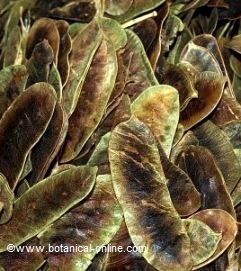 Senna fruit
When should we take senna preparations?
In principle all stimulant laxatives should only be taken when no other remedy has proved to be effective. Regular use may produce a “lazy colon” used to work only when you supply this type of drug. There are countless people who have developed this kind of dependence on this laxative and have many problems with constipation regularly, so they are forced to take cassia, senna or cascara to defecate.
On the other hand, there are studies that seem to suggest that regular use of this plant may favor the development of cancerous tumors.
To avoid this problem, it is advisable to accustom the body to a type of diet and living conditions conducive to non-appearance of constipation. A diet rich in natural plant foods that contain more fiber, increased water intake and regular exercise can prevent this problem in most cases. (More information on the natural treatment of constipation)
When this type of diet is not enough, you can use other mild laxatives such as psyllium seeds (Plantago psyllium)
Sometimes in special circumstances is necessary to use cassia, such as in patients with hemorrhoids facing with serious problems, such as after surgery, rectal interventions, etc. Anyway, it is advised to use this plant in a non longer treatment than a week or ten days. It would also be wise to consult a doctor before using it.
What about whole bread with senna seeds?
The use of senna seeds in whole bread and pastry has become usual in Western society. It is sold without prescription in bakeries or supermarkets. This has led to abuse of this type of bread by people who have got their bodies used to indiscriminate use of this plant. Like the other products made with senna, this bread should only be taken when the doctor advises and for short periods of time.
Is cassia a safe remedy
Cassia treatments present some contraindications, toxicity and side effects that have to be taken into account before taking it
 More information on cassia toxicity, contraindications and side effects.