Contents
Medicinal benefits of plant flavonoids
CHARACTERISTICS OF FLAVONOIDS
What are flavonoids?
Flavonoids or bioflavonoids are non-nitrogenous plant pigments.
The word flavonoid derives from the latin word “flavus”, which means yellow. Considering that some flavonoids provide the yellow color to some plant parts, it is not strange the general name of “flavonoid”
Other flavonoids provide the red color of buds, shoots or leaves in autumn. They are also responsible for the colors of many fruits.
Many varieties of color in the flowers depend on the acidity of the medium.
Acidic conditions provides strong red colors; an alkaline medium, blue color and a neutral environment, provides the violet. These variations explain why the same plant, such as hydrangea, color varies according to where it is planted.
What are flavonoids functions in plants?

Photo of green tea, its flavonoids are powerful antioxidants with recognized medicinal properties
Their functions in the plant world seems to be to attract pollinators to flowers or animals that eat the fruits with the intention that they can disperse the seeds.
A very distinctive, for example, is that of bromeliads among which we have Tillandsias or Billbergias. These plants develop flowers on a kind of stem that emerges from a number of rosette leaves. This stem is formed by a series of bracts. These bracts have a strong reddish color before or during pollination and then become more green.
Other times flavonoids have the function to attract prey. The same carnivorous plants such as sundew, uses anthocyanins in their flowers to attract insects which it devours.
Many times the flavonoids are the plant adaptive response to intense ultraviolet radiation. These components protect plants from the harmful effects of these noxious rays.
Other times these components show unpleasant flavors what would constitute an advantage against herbivores that would reject these kind of food.
How many flavonoids are there?
More than 600 flavonoids have been discovered. They all seem to have an important role in human food. They have very interesting medicinal properties:
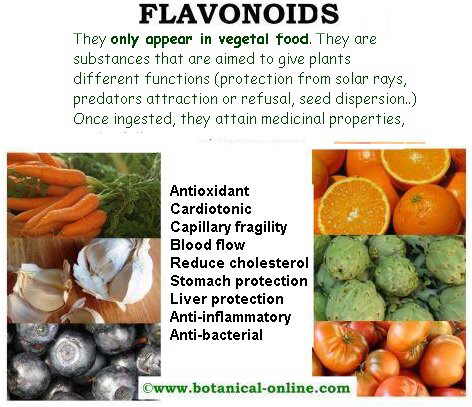
Main curative properties of flavonoids
MEDICINAL PROPERTIES OF FLAVONOIDS
They all seem to have a very important role in human food, since they have interesting medicinal properties.
Flavonoids are found only in plants, so, to obtain these components, we must eat a diet rich in vegetables. Among the main properties of the flavonoids, we can mention the following:
Antioxidant properties of flavonoids
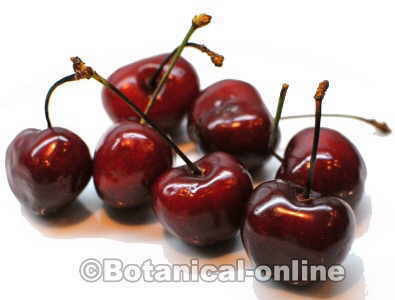
Photo of cherries. Cherries are very rich in anthocyanins, some pigments (flavonoids) that give them their purple coloration and antioxidant properties.
Most of flavonoids, especially catechins of green tea, have a high capacity to neutralize the free radicals and to prevent the pernicious effects these have on the health of our body.
Many studies confirm the antioxidant properties of different plants (such as green tea or rosemary) and their importance in the prevention or deceleration of the degenerative effects and brain damage that these diseases cause. These properties may be suitable in the treatment of diseases such as Alzheimer’s or cancer.
Used as supplements, in combination many times with the vitamin C, can be able to neutralize virus like those of herpes.
Plant flavonoids: remedies against cancer
Many flavonoids have been tremendously effective in the treatment of the cancer, especially in in vitro studies, although their efficacy in vivo is more difficult to determine It is known that many inhibit the growth of cancer cells.
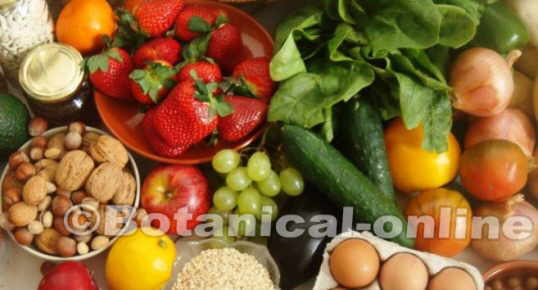
A diet rich in vegetables provides protection against many affectations and diseases, including cancer.
It has been shown that a diet rich in vegetables provides protection against many diseases, including certain types of cancer. These effects are not only due to the nutritional properties of foods (carbohydrates, fiber, vitamins, etc.), but to flavonoids, that seem to be another component of the essential nutrition to maintain our health.
For this reason, more and more importance is being given to food in the treatment of cancer. A diet that provides these principles can be a true preventive remedy or even participate in the healing and success of cancer treatment
Benefits of flavonoids to improve circulation
- Cardiotonic: They have a tonic effect on the heart, strengthening the heart muscle and improving circulation. Mainly attributed to the flavonoid quercetin, such as in garlic or or onion, although it appears less intense in others, such as genistein and luteolin.
- Capillary fragility: They improve the strength of capillaries, so they prevent them to break, preventing bleeding. Among all the flavonoids, hesperidin, rutin and quercetin should be mentioned in order of importance. Also, resveratrol found in grapes and wine.
- Antithrombotic properties: The ability of these components to prevent thrombus formation in blood vessels allows better circulation and prevention of many cardiovascular diseases.
- Lowering cholesterol: Its capacity to reduce cholesterol and triglycerides supposes an advantage in the health of the circulatory apparatus.
Other medicinal benefits of flavonoids
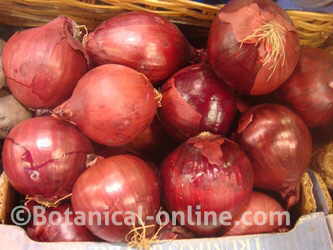
Onions are rich in quercetin, a flavonoid with antiallergic properties
- Protection of the liver: Some flavonoids have demonstrated their protective power against liver diseases. Silymarin from milk thistle has been tested experimentally as a protective and regenerative for the liver in hepatitis.
The same flavonoid, together with apigenin and quercetin, are very useful to eliminate certain digestive ailments related to the liver, like the feeling of fullness or vomits.
- Protection of the stomach: Certain flavonoids, including quercetin, rutin and kaempferol have properties, anti-ulcer properties which can be useful to protect the gastric mucosa or inner linnen of the stomach.
- Vision health: these components, having very beneficial properties for circulation, have an important role in protecting the small capillaries of the eye. All flavonoids, but especially anthocyanins, have these properties. For this reason they are found in many supplements to improve vision. Its work is the protection of the capillaries of the retina, playing a fundamental role in the conservation of good vision health.
- Anti-inflammatory and analgesic: Hesperidin, from lemons or oranges, and other flavonoids, for its anti-inflammatory and analgesic properties, have been used for the treatment of certain diseases such as arthritis.
- Antimicrobial: Most of flavonoids have proven to have antiviral, antifungal and antibacterial.
Where to find flavonoids?
Most of flavonoids in fruits are found in the skin, reason why it is better to eat them without peeling them, once we have washed them properly.
Types of flavonoids
The most important flavonoids would be the following:
MAIN FLAVONOIDS | ||
| Beta carotene | Alpha-carotene | Lycopene |
| Lutein / Zeaxanthin | Capsanthin | Catechins |
| Cryptoxanthin | Anthocyanins | Rutin |
| Quercetin | Hesperidin | Resveratrol |
 More information on components of the medicinal plants.