Contents
Medicinal properties of fig tree
Internal use preparations with figs
- Laxative: Against constipation (Decoction of raw dry figs. Boil 3 dry figs in water for a quarter of an hour.

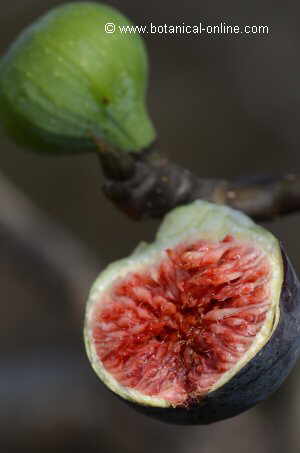
A detail of an opened fig and another one still immature Leave to rest and drink the liquid and eat the figs the following morning.)
- Mouth cleaner: when having mouth disorders – inflammation, wounds, mouth ulcers, etc.- the same preparation seen above can be useful.
- Bronchitis: Having a cold or a pain in the breast, figs show emollient properties – to soften chest mucus. (A quarter of a liter of boiled milk with 12 dry figs for ¼ of an hour. Drink the liquid once strained and sweetened)
- Cough: They are very useful to relieve cough. (A quarter of a liter of boiled milk with 12 dry figs for ¼ of an hour. Drink the liquid once strained and sweetened)
- Pancreatitis: Proteolytic enzymes provided by some fruits, such as ficin from figs, are very useful to treat pancreatitis, since they help the pancreas to disaggregate food proteins into peptides which are transformed into amino acids. People affected with pancreatitis are not able to produce the necessary enzymes for digestion so ficin can be very helpful in this case. (Eat figs in your meals)
External use remedies with figs and latex of fig tree
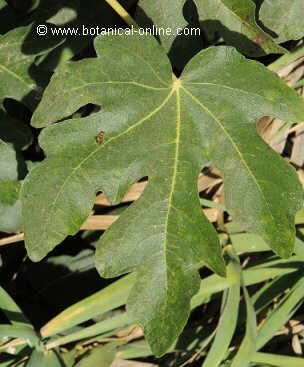
These are very aggressive treatments by the abrasive nature of the components used. It is important to apply the treatments only on the affected area, protecting the rest of the healthy skin.
Once a treatment it is applied, it should be covered with gauze and plaster preventing its contents to reach the healthy parts surrounding the affected area.
These treatments should not be used with children or people with sensitive skin to those they can easily produce skin ulcerations.
- Warts: to remove warts. (We use the liquid or latex dripping when cutting a branch or a leaf. Soak the wart with it several times daily.)
- Corns: To get rid of calluses (Apply the milky white juice of the leaves to the corn)
- Insect bites or stings: (Apply the milky juice of the leaves)
Other uses of fig tree
- Skin sagging: To reaffirm your face skin you can make a mask with black fig pulp, to which you can add a few drops of lemon. (Apply to your face for 30 minutes and wash it with cold water)
- Curd: Latex from leaves can be used as ” curd ” for milk
Edible properties of figs
Figs, being very rich in sugars, it is especially recommended for those people who are doing a big physical effort or for the children who ” burn ” a lot of calories in their continuous activity.
In the same way, because their content in minerals and vitamins (look at its components) they are very helpful for the body.
It is is a fruit containing many mucilages, which have the ability to protect internal mucous, so eating figs is very appropriate for the treatment of gastrointestinal irritation. (Gastritis, stomach pain, indigestion, etc.)
Nutritional composition of figs
| Composition of figs per 100 gr. | |
| Figs | |
| Water | 79.11 gr. |
| Calories | 74 |
| Fat | 0,75 |
| Protein | 19.18 gr. |
| Carbohydrates | 0.30 gr. |
| Fiber | 3,3 |
| Calcium | 35 mgs |
| Potassium | 232 mgs |
| Iron | 0.37 mgs |
| Magnesium | 17 mgs |
| Phosphorus | 14 mgs |
| Sodium | 1 mg |
| Vitamin A | 142 UI |
| VitaminB1 (Thiamin) | 0,06 |
| Vitamin B2 (Riboflavin) | 0,05 |
| Vitamin C | 2 mgs |
 More information about fig tree and figs.