Contents
- 1 How to restore gut health with healthy foods
- 1.1 DIET FOR INTESTINAL DYSBIOSIS
- 1.2 What should a diet be like to improve intestinal flora?
- 1.3 Prebiotics for intestinal flora
- 1.4 What are antibiotic foods?
- 1.5 Probiotic foods to repopulate the intestinal flora
- 1.6 Other important aspects for regenerating intestinal flora
- 1.7 Who can have weakened gut flora?
How to restore gut health with healthy foods
DIET FOR INTESTINAL DYSBIOSIS
The microbiota or intestinal flora is made up of a series of microorganisms that feed on the fiber we consume in our diet, mainly carbohydrates, in the form of fibers and starches.
What should a diet be like to improve intestinal flora?
If we want to effectively repopulate our gut with a healthy flora or microbiota, the diet should provide: foods with prebiotic, antibiotic and probiotic properties.
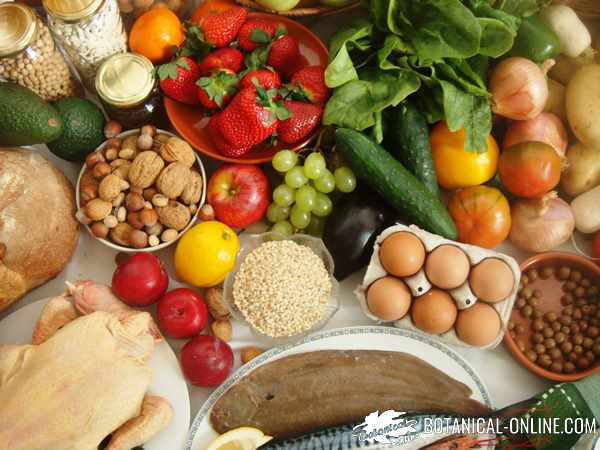
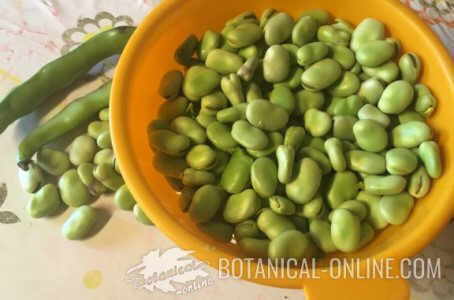
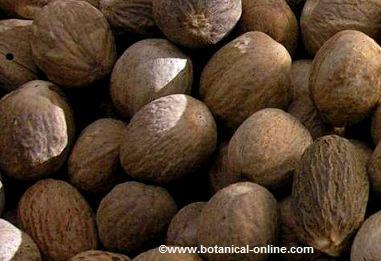
Foods with a lot of fiber promote the growth of good bacteria in the intestine: fruit, vegetables, nuts, cereals, tubers, legumes
Prebiotics for intestinal flora
Prebiotic foods are those rich in prebiotic fiber, that is, fiber that is highly fermentable for gut bacteria. A healthy gut microbiota or gut flora feeds on the products of the fermentation of this fiber.
It’s worth mentioning that not all fiber has a prebiotic effect. The best sources of fiber are fruits, vegetables, tubers, and legumes, which provide soluble fibers such as pectins and FOS.
Instead, insoluble fiber such as wheat bran, which is added to many whole-grain products (whole-grain cookies or whole-grain bread ), does not have the capacity to be fermented, and even in excess can even produce irritation or intestinal blockages.
- Therefore, it is important to choose the right fiber-rich foods in your diet, as they will greatly condition the growth of healthy bacteria in the intestine.
What are antibiotic foods?
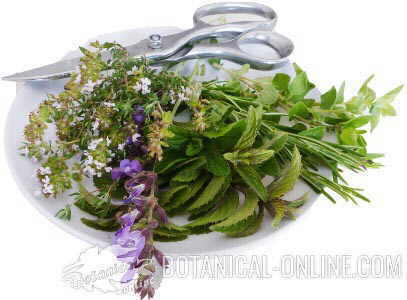
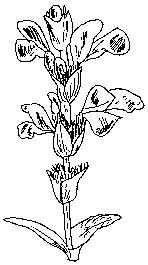
Mediterranean aromatic herbs with antibiotic properties: thyme, rosemary, spearmint, oregano, sage,…
Antibiotic foods are plants that act against infectious or pathogenic bacteria in our intestines, such as garlic or onions (raw), ginger, turmeric, cinnamon, pepper, chili peppers,… Aromatic herbs are also very important, such as rosemary, bay leaf, thyme , mint or oregano.
All of them constitute an excellent natural antibiotic resource, as well as very affordable for all budgets.
Probiotic foods to repopulate the intestinal flora
Probiotics are live bacteria that are ingested through fermented foods or supplements. Among the main probiotic foods, we can mention: sauerkraut, olives and pickles, kombucha and fermented dairy products.
Probiotic supplements, containing healthy bacteria, can be recommended to help populate the intestines and improve their composition. It is especially recommended to take this type of supplement after enteritis, infections, or in certain conditions. (consult your doctor) (Tips before taking probiotics).
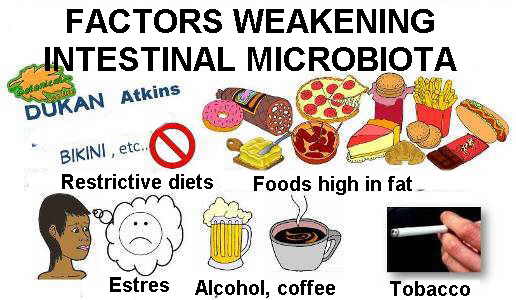
Sheet with some of the main dietary recommendations for improving the gut microbiota or intestinal flora. Main factors that weaken it ©Botanical-online.com
Other important aspects for regenerating intestinal flora
It has been scientifically proven that there is a strong hormonal component in many intestinal disorders. Among these, stress is a clear trigger for outbreaks and episodes of diarrhea or constipation.
That’s why it’s worth mentioning the importance of good lifestyle habits, which include getting enough sleep, avoiding a sedentary lifestyle, and reducing stress. Stress hormones are harmful to the gut. Walks, pleasant conversations, relaxation techniques, etc., can be very helpful in these cases.
Equally interesting is contact with nature, which, in addition to its anti-stress role, allows us to come into contact with healthy microbes that are not found in cities, among other benefits.
Who can have weakened gut flora?
People with the following conditions may have weakened gut flora:
- Stress, flatulence, bloating, inadequate diet, dietary changes (travel, vacations, etc.), old age
- Laxative abuse
- Treatments with antibiotics or other medications
- Celiac disease or gluten allergy
- Infections, diarrhea, gastroenteritis, candidiasis
- Intestinal diseases (pancreatitis, diverticulitis, Crohn’s disease or irritable bowel syndrome)
- Operations such as gastric bypass, stomach reduction, cholecystectomy (gallbladder surgery), etc.
 More information on The properties of fiber and the benefits of probiotics