Contents
- 1 Remedies for constipation with fiber or natural laxatives
- 1.1 Vitamins, minerals and food supplements for constipation
- 1.2 Traditional remedies for constipation
- 1.3 Non-aggressive supplements for constipation
- 1.4 Bran and fiber for constipation
- 1.5 Seeds against constipation
- 1.6 Other natural remedies for constipation
- 1.7 More remedies to solve constipation: Strong laxatives
Remedies for constipation with fiber or natural laxatives
Vitamins, minerals and food supplements for constipation
The use of vitamins, minerals, or other supplements can be helpful for the treatment of constipation. It’s worth mentioning that, as with any type of intestinal condition, following an appropriate diet is the best way to treat constipation and prevent future complications.
Traditional remedies for constipation
In many cases, a proper diet and the use of dietary supplements (seeds, fiber, etc.) are usually enough to solve problems of chronic constipation. However, it is advisable to remember that constipation should always be treated under medical supervision to rule out other possible bowel diseases.
People who suffer from constipation regularly should not resort to the use of laxative or purgative infusions, as these can produce the opposite effect and aggravate the condition.
Non-aggressive supplements for constipation
Among all the supplements we can use, we can use the following:
- Prunes: A traditional remedy for constipation consists of eating two or three prunes at breakfast, which have previously been left soaking in water overnight, as well as drinking the water from this preparation. Prune juice is particularly interesting, which due to its high sorbitol and hydroxyphenylisatin constitutes a genuine natural medicine against constipation.
- Vitamin C with magnesium: Vitamin C can have laxative properties. It has been shown that daily doses of 300 mg, divided into three intakes, help promote bowel movements. Magnesium enhances the action of vitamin C. The recommended daily dose of this mineral is around 400 mg.
- Glucomannan: Glucomannan promotes the formation of soft, bulky stools, which also have a probiotic effect. It has a mild laxative effect that helps normalize intestinal transit. (Capsules or powder: Take between 500 and 1,500 mg of glucomannan at least 30 minutes before meals with two glasses of water.) Drink plenty of water to avoid intestinal blockage.
Bran and fiber for constipation
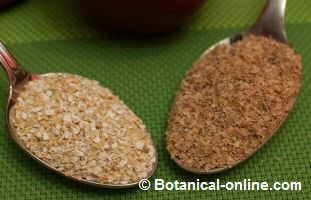
Oat and wheat bran
Wheat bran is often given in cases of occasional constipation. It can be a suitable option, as long as it’s not used regularly. It’s preferable to substitute it with oat bran.
Wheat bran should always be consumed with plenty of fluids to prevent possible intestinal blockages. (Eat high-fiber breakfast cereals—most are made from wheat bran.) It is contraindicated and not suitable in the case of people with inflammatory disease problems. (See contraindications)
Seeds against constipation
The high mucilage content in chia and flax seeds facilitates the passage of food through the digestive tract, having a beneficial effect against constipation. (Soak one teaspoon of chia seeds in water overnight. Drink the preparation upon waking.) (Take 1 teaspoon of chia with a glass of water, 3 times a day.) (How to take chia)
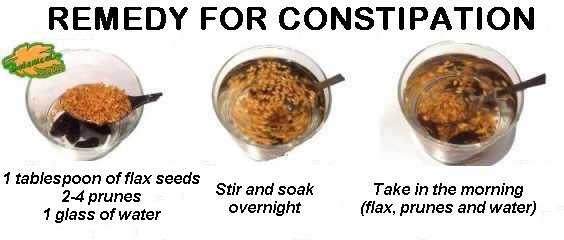
Flax and prunes remedy for constipation
Other natural remedies for constipation
- Oat flakes: Due to their high fiber content, both soluble and insoluble, oat flakes are highly recommended against constipation. It is recommended to soak the flakes for 30 minutes before consumption so that they hydrate. Consume with a glass of water.
- Agar agar: The use of a teaspoon of agar agar powder diluted in two glasses of cold water forms a kind of gelly that is eaten to promote bowel movements. If preferred, dishes can be prepared with this gel to add more flavor, as agar agar itself is tasteless. (Capsules: 2 capsules with a glass of water, 3 times a day)
- Sesame: Sesame seeds are particularly rich in mucilage and are also notable for their high calcium content (900mg per 100g). It is highly recommended to consume them in case of constipation, especially in older adults, menopause, osteoporosis, etc. (Crush the sesame seeds and consume 1 tablespoon, 3 times a day, with plenty of water.)
- Ispaghula or Psyllium: Due to its high fiber content, it produces an increase in peristalsis, or intestinal movements, caused by the increase in size that this substance produces when absorbing water, which leads to the need for evacuation. At the same time, its mucilage exert a softening function on the walls of the intestine, so this plant can help to evacuate without being harsh or irritating. (1 to 3 tablespoons daily dissolved in water or juice. It is necessary to drink at least 2 liters of water to avoid intestinal retention).
More remedies to solve constipation: Strong laxatives
In principle, although there are a whole series of stimulant laxatives, they should only be taken occasionally and when other remedies are not effective. Regular use can lead to a “lazy colon”, accustomed to working only when this type of drug is administered (intestinal dependence). Countless people have developed this type of dependence on these laxatives and suffer from severe constipation, as they exacerbate the symptoms of chronic constipation. They should never be taken during pregnancy or breastfeeding.
These include:
- Cascara sagrada (Rhamnus purshiana)
- Cassia ( Cassia spp. )
- Frangula ( Rhamnus frangula )
 More information on treatment, remedies and tips for constipation .