
Contents
Characteristics of natural laxatives
What are laxatives?
Laxatives are called substances (synthetic or natural) that have the purpose of facilitating bowel evacuation.
A distinction must be made between laxatives and purgatives. The latter have a more drastic effect. They are also called cathartics.
What are laxatives used for?
Laxatives are primarily used for:
- Combat constipation.
- Expel intestinal parasites, mainly pinworms or intestinal worms.
- Empty the bowel, so that it is clean before a surgical procedure or a medical examination, such as a colonoscopy.
- Nowadays, unfortunately, the use of laxatives in weight-loss diets is very much in vogue. The malabsorption they produce causes fats not to be absorbed, which are expelled, and therefore, without being digested, they do not provide calories.
Types of natural laxatives
According to the way we classify the natural laxatives are:
- Stimulant laxatives or purgatives: These are the ones with the most drastic effect, also called purgatives or cathartics. They work by stimulating the intestines. Their active ingredient is anthraquinones, which act on the nerve endings in the intestines, causing greater movement of bowel movements (peristalsis), which favors defecation. Among them, the most common infusions include: cascara sagrada, frangula, senna leaves, rhubarb, and aloes, including aloe vera.
- Mechanical laxatives: These are laxatives rich in fiber (soluble or insoluble). These components increase stool volume by retaining water and press against the intestinal walls, causing natural peristaltic movements, which favor the expulsion of the stool. Among these, the following stand out: psyllium, flaxseed, fucus, agar-agar, chia, and carrageenan.
- Osmotic laxatives: These are laxatives rich in osmotic agents (such as lactulose, magnesium salts, or phosphates). They increase the volume of water in the intestine and soften the stool. Among the natural osmotic laxatives we have those foods rich in magnesium or phosphates, such as plums (Prunus domestica).
Types of laxatives
We can distinguish the following types of laxatives:
- Chemical laxatives: they are drugs produced in laboratories. An example of these are osmotic laxatives or mineral salts, which have to obtain in laboratories.
- Natural laxatives: these are laxatives obtained directly from plants. They can be dried plants, tablets, extracts, or oils derived from them.
Problems with laxative abuse
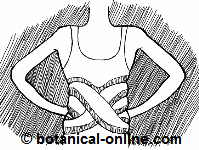
Laxatives should only be taken when absolutely necessary. Changes in habits and a proper diet with natural foods can, in most cases, be enough to combat constipation.
The use of laxatives should be especially controlled in children and in sick or elderly people.
It is very common today to abuse laxatives, taken without a prescription, is very common nowadays, both for treating constipation and as in numerous weight loss diets. All this can lead to the appearance of numerous health problems, such as abdominal pain, diarrhea, and imbalances in blood minerals, especially potassium, a state known as hypokalemia, with symptoms including muscle weakness, cramps, arrhythmias, constipation, intestinal obstruction, etc.
Water loss from laxative ingestion, if not compensated for with abundant liquids, can cause dehydration.
In the event of the appearance of intestinal abnormalities, such as persistent constipation, you should consult your doctor so that you can rule out possible intestinal abnormalities, such as persistent constipation, you should consult a doctor so that possible intestinal diseases can be ruled out.