Contents
Herbal treatment of bad breath
Phytotherapy: Medicinal plants preparations for bad breath
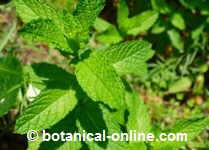
Mint leaves are used in infusions, mouthwashes or they are chewed fresh to combat bad breath
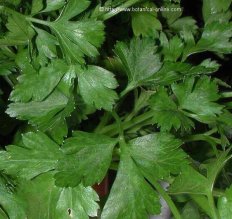
Parsley leaves, chewed or in infusions, can be an aid to reduce halitosis
Ginger infusions can be used to perform mouthwashes in order to treat bad breath |

The main role of phytotherapy in the treatment of bad breath involves the use of medicinal plants with the following properties:
– Antiseptic plants that eliminate the bacteria of the mouth
– Aromatic plants that mask the bad odor
Internal use preparations with medicinal herbs to treat bad breath
Among all the medicinal plants suitable to reduce bad breath we can point out the following:
Boldo (Peumus boldus) infusions or chewed leaves are indicated for bad mouth odor.
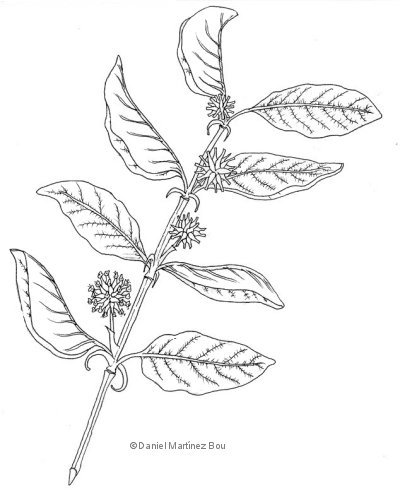
Guava (Psidium guajava) Traditionally, the leaves are chewed against bad breath.
Mint: (Mentha ssp.) It counteracts the exhalation of malodorous products of some plants, like garlic and onion. (Infusion of one teaspoon of dried plant per cup of water. Take two glasses per day)
Parsley: (Petroselinum crispum) With the same function as the mint. (Take 3 tablespoons of juice per day, obtained by crushing the plant or shop in shop) (Consult possible toxicity in the complete article of the parsley)
Kumquat: (Fortunella spp) Its antiseptic properties are an excellent remedy for treating halitosis, as it fights the bacteria that cause bad breath.(Eat the fruits including the skin)
Mouthwashes and oral rinses for bad breath
Sage: (Salvia officinalis) for its bactericidal properties, it is adequate to kill bacteria that cause halitosis (Mouthwashes. Make an infusion of a spoonful of dried plant per cup of water)
Eucalyptus: (Eucalyptus globulus) Like the sage, it is rich in bactericidal components and can be used for the same purpose. In fact, many commercial mouthwashes contain cineol. (Infusion of leaves in water. Perform mouthwash)
Tarragon: (Artemisia dracunculus) tarragon has been cited as a remedy for bad breath, it has components against bacteria that cause it.. (Rinses with the preparation of an infusion of dried leaves in water)
Thyme: (Thymus vulgaris) In addition to combat bad breath, it is useful when problems arise in the mouth, such as inflammations or sores. (Rinses with the preparation of an infusion of dried flowers in water)
Rosemary: (Rosmarinus officinalis) It can be used with the same properties as thyme (Rinses with the preparation of an infusion of dried flowers in water)
Cinnamon: (Cinnamomum zeylanicum) Coumarins and vanilla have bacteriostatic properties which precludes the development of bacteria in the leftover food in the mouth and prevent halitosis. Keep in mind that cinnamon contains about 50 aromatic components, mainly for its rich in terpenes. (Mouthwash with the infusion of a couple of tablespoons of cinnamon shredded per liter of water)
Spirulina: The chlorophyll content of spirulina makes it very suitable for the treatment of halitosis or foul odor. The chlorophyll freshens the mouth and provides a good smell. That is why many industrial mouthwashes include it in their composition.
Mint: (Mentha x piperita) for their antibacterial properties is adequate to kill bacteria that cause halitosis. (Place 3 drops of tincture mother in the mouth and stir well with the tongue by the teeth and gums) (Chewing fresh leaves plant) (Make rinses infusion of a spoonful of dried plant per cup of water)
Seeds and other medicinal herbs to chew to diminish bad breath
Anise: (Pimpinella anisum) Bacteriostatic properties of quercetin are capable of inhibiting the growth of bacteria in the mouth. The secretions of these microorganisms are responsible for many cases of halitosis. On the other hand, anise contains more than twenty aromatic components (thymol, linalool, geraniol, estragole, limonene, camphene, alpha-pinene, alpha-terpinene, etc). These principles are able to mask the foul odor, providing the person and nice fresh breath. The use of the fruits of anise as a remedy to remove bad breath is prevalent in most cultures. (Chewing three or four fruits of anise after meals)
Fennel: (Foeniculum vulgare) To combat bad breath it is useful chewing some seeds of this plant after meals.
Coriander: (Coriandrum sativum) Widely used in Oriental countries. In India it is common to chew some seeds after meals to combat odor. You can also make a decoction for 3 to 4 minutes with a teaspoon of seeds in a pint of water and then make mouthwash.
Parsley: (Petroselinum crispum) It counteracts exhalation of malodorous products of some plants, like garlic and onion. (Chewing a sprig of parsley after meals)
Cardamom: (Elettaria cardamomum) Widely used in Arab countries where it is common to chew some seeds after meals to combat odor.
Dill: (Anethum graveolens) Like cardamom, chewing seeds of this plant can clear the evil breath.
Ginger (Zingiber officinale) A well-known oriental technique is to use a small piece of pickled ginger and vinegar to be found in Oriental stores to remove bad breath and freshen your mouth after meals. Ginger infusions are also suitable.
Related information: chlorophyll supplements to fight the body odor, spirulina mouthwashes for bad breath
 More information on bad breath