Contents
- 1 Medicinal properties of fennel
- 2 Internal use remedies with fennel
- 2.1 Fennel for digestive system
- 2.2 Fennel for flatulence and bloating
- 2.3 Nerves in the mouth of the stomach
- 2.4 Diuretic properties of fennel fruits and roots
- 2.5 Fennel for the respiratory system
- 2.6 Hormonal properties of fennel
- 2.7 Antioxidant and anti-cholesterol properties of fennel
- 2.8 Other uses of fennel
- 3 Internal use preparations with fennel
Medicinal properties of fennel
Traditional uses of fennel
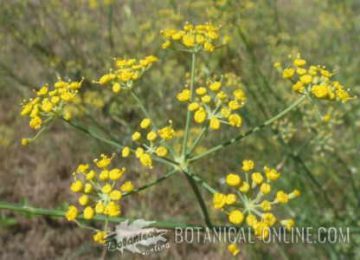
Fennel or sweet fennel (Foeniculum vulgare Mill.) is a medicinal plant used since the time of Dioscorides, and even much earlier, in Ancient Egypt. This plant, native to the entire Mediterranean region, was widely used by the Egyptians, Greeks, Romans, Arabs and Chinese.
The use of this plant, both medicinal and gastronomic, has passed from generation to generation, and across different cultures, to the present day.
What properties does fennel have?
The plant is very rich in essential oils (especially fruits), flavonoids and organic acids.Its content in essential oils, with high anethole content, gives the plant digestive, carminative, expectorant, antiseptic and spasmolytic properties.
Its properties enable it to treat various digestive system disorders. As a sign of the value of this plant at a gastronomic and curative level, Emperor Charlemagne ordered the cultivation of fennel in all its villages, leaving a record of it in the Capitullarie de Villis.
Internal use remedies with fennel
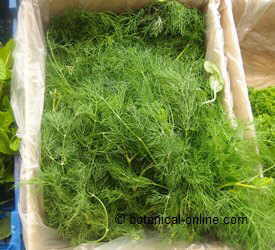
Fennel for digestive system
Fennel is carminative, tonic, stomachal and digestive. It favors digestion, reduces stomachache or abdominal pain, contributes to expel flatulence and aerophagia and opens the appetite (Infusion of 5 gr. of dry fruits for cup of water. Drink 2 cups a day) (in the event of inappetence to take a cup of the infusion half hour before the meals)
* Related information: How to make a fennel infusion
Fennel for flatulence and bloating
Fennel belongs to the group of carminative medicinal plants, such as cumin, anise, coriander or caraway.
As the last ones, fennel is a carminative herb because it helps to expel flatulence and it is very useful against the swollen belly, when it is due to the accumulation of gases. (Against excess gas, chew a pinch of dried fennel fruits grains, salivating them well. Do not accompany them with vegetables or fiber-rich foods) (Infusion 5 gr. of nuts per cup of water. Drink 2 cups a day)
Nerves in the mouth of the stomach
Fennel helps other herbs reduce the sensation of nervous oppression in the upper stomach. (Decoction for 20 minutes of a teaspoon per glass of water of the mixture in equal parts of linden, fennel, sage and yarrow leaves. Take a couple of glasses a day)
Diuretic properties of fennel fruits and roots
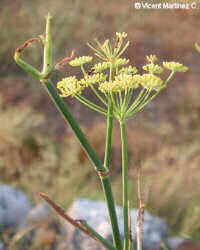
Fennel is very rich in components with diuretic properties, such as its potassium salts and essential oils.
It increases the elimination of corporal liquids, being very appropriate in cases of cellulite, obesity, rheumatic illness (Arthritis) and heart illnesses associated with the accumulation of water in the body. (Decoction during 10 minutes of 2 ounces of fresh root in a liter of water. Drink a glass after the main meals) (Infusion of 5 gr. of dry fruits for cup of water. Drink 2 cups a day)
Fennel for the respiratory system
Fennel has bronchial and antitussive properties: In case of bronchitis or cough, as well as when one has a pain in the chest, it is very appropriate this plant for its expectorant values (2 drops of essence dissolved in sugar after the main meals. Take this remedy during 3 days as maximum) (Infusion of a teaspoon of crushed fruits per cup for 10 minutes. A couple of cups a day)
Hormonal properties of fennel
Fennel is rich in flavonoids that give it a slight effect on hormonal regulation. These properties have been traditionally used for phytotherapy in:
- Emmenagogue: It favors menstruation and alleviates the pains associated with it. (The same preparation mentioned previously)
- Galactogen: Fennel is a plant traditionally used for its galactogenic properties, to stimulate the secretion of milk from nursing women. In some countries, the fennel bulb is usually given to women to stimulate breastfeeding during this period. (Infusion 2 gr. of dry seeds per cup of water) (Eat fennel bulb) (See: Dangers of fennel during breastfeeding)
Antioxidant and anti-cholesterol properties of fennel
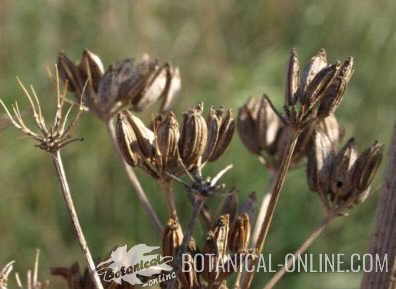
Because of its content in flavonoids, chlorophyll, alanine, tryptophan, methionine and histidine, fennel fruits can be considered great antioxidants. (Infusion of 5 grams of dry seeds per cup of water. Drink 2 cups a day)
Its richness in ascorbic acid, oleic acid and linoleic acid, as well as the presence of beta-sitosterol , calcium and magnesium give it the power to reduce the level of cholesterol in the blood, preventing the risk of coronary heart disease, such as heart attack or brain hemorrhage. It can also be a good remedy for those with poor circulation problems. (It must be accompanied by a diet against cholesterol) (Infusion of dried flower tops half an hour before meals).
Other uses of fennel
- Anemia: (Infusion of a spoonful of dried plant per cup of water. A couple of cups a day) (maceration of about 150 gr. of dried seeds in a liter of white wine for ten days. Drink a glass before eating)
- Glaucoma: Fennel can relax eyes from excessive intraocular pressure. (Decoction of 40 gr. of seeds per liter of water. Take one or 2 cups daily)
- Stimulant: It is very popular in India as one of the most stimulating plants.
- Impotence: It increases potency (10 gr. of decoction of the root. Drink 3 cups daily)
- Anorexia: It whets your appetite (Infusion of half a teaspoon of dry seeds per cup of water. Take a couple of cups a day)
Internal use preparations with fennel
- Eyewash: For irritations of the tired eyes (Squeeze the tender plant and apply some juice on the eyes with a gauze). This is a good remedy for conjunctivitis. For retinal detachment or glaucoma you can use the decoction of 40 gr. of seeds per liter of water. (Wet your eyes with a towel)
- Palliative: It is a lenitive for the stomach pains (Apply a cataplasm of boiled leaves on the stomach)
- Relaxant: (Pour an infusion of a couple of liters of water with 50 gr. of fruits in the bath) it will produce a remarkable relaxing effect to our body).
- Hair tonic: to strengthen the hair and to contribute to preserve it from baldness (Carry out frictions with the resulting liquid of the infusion of dry leaves).
- Alzheimer disease: Fennel has antioxidant properties very useful to avoid the damage that free radicals inflict on acetylcholine. In external use, we can make use of essential oil frictions (Friction on the head with diluted fennel oil) or in the water of bath (add a few drops of tincture in the water of the bath)
- Bad breath: To combat bad breath it is useful chewing some seeds of this plant after meals.
Non-medicinal uses of Fennel
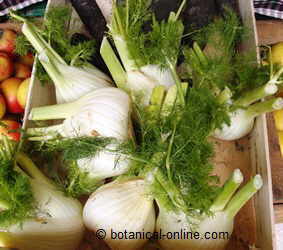
- Food: The bulb or fresh heart can be used in salads that can be combined with other vegetables and plants that increase their properties. Their foliate sheaths can be cooked as vegetables, with potatoes, with cabbages, etc.
- Perfume industry: Its great content in essences makes it very appropriate for the extraction of raw materials that are used in the perfumery industry.
Is fennel a safe plant?
Although fennel is a very safe product, a number of contraindications and side effects should be taken into account.
The essential oil, mainly due to its composition in anethole and estragol, taken undiluted or in large doses, has a narcotic effect, causing respiratory problems, hallucinations, seizures and cardiac arrhythmia.
The same effect can lead to the ingestion of fruits in doses higher than those recommended above.
 More information on fennel