Contents
Supplements to combat constipation
DIET AND HEALTHY HABITS AGAINST CONSTIPATION

- Diet for constipation: A diet rich in fiber and water benefits intestinal transit. The consumption of bifidobacteria (yogurt, kefir) is also of interest. *More information: Diet for constipation
- Avoid a sedentary lifestyle: Regular exercise benefits bowel movements and helps improve constipation.
- Massages for constipation
| Diet and physical exercise are a basic factor in preventing constipation and regulating bowel movements. |
REGULATING FIBER
Regulating fiber is soluble fiber found in foods such as fruit, vegetables, and seeds. These should be consumed with plenty of water so that they form a gel in the intestine, which hydrates and increases in volume.
The gel is emollient and stimulates the intestinal walls, increasing their movement (peristalsis) and softening the stool. This improves the gut microbiota and helps regulate bowel movements.
| Regulating fiber supplements have few contraindications since fiber is found naturally in foods. *More information: Foods rich in fiber. |
The best known regulating fibers are pectin, inulin, mucilage, gums and glucomannan (Fiber types).
Because this type of fiber increases in size, it is also used as a remedy to satisfy hunger.
The most convenient way to take these supplements is by adding them to yogurt or salads, or by taking them in capsules. They should always be taken with a glass of water.
Regulating fiber supplements:
 Agar-agar: seaweed preparation rich in soluble fiber. It increases stool bulk, regulates bowel movements, and softens stools. Ideal in jellies along with pectin-rich fruits (apples, strawberries, oranges, etc.).
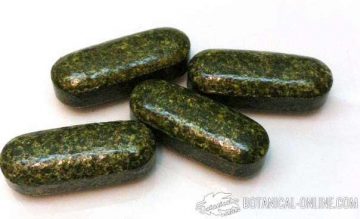
- Spirulina: it contains mucilaginous fiber that helps increase stool bulk.
- Fenugreek: it is rich in glucomannan fiber, which has a high hydration capacity and a laxative effect.
- Fucus: it has a high concentration of mucilage, which promotes evacuation.
- Glucomannan: soluble fiber supplement of the glucomannan type, extracted from the konjac root. This type of fiber has a high hydration capacity and is used for constipation.
- Flaxseed: it is rich in Omega 3 and soluble fiber.
- Icelandic lichen: it has a high concentration of mucilage.
- Rye mucilage: decoction for constipation. Rye contains pentosans, a type of fiber with an intestinal regulating effect that gives rye bread its sponginess.
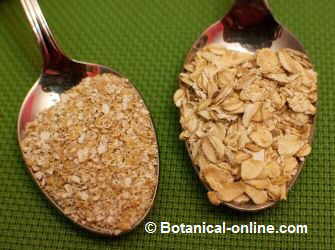
- Oat bran: it contains soluble and insoluble fiber. It excerts a satiating, energizing, regulating and laxative effect.
- Chia seeds: seeds very rich in fiber, mucilage, and minerals. They are eaten with yogurt or on salads to relieve constipation.
- Sesame seeds: In addition to their well-known calcium content, these seeds are rich in mucilage. Including them in your diet helps regulate bowel movements.
*Related information: Herbs for constipation
FIBER LAXATIVE
Its laxative effect is rapid and mildly irritating. Preparations like wheat bran are contraindicated in cases of irritable bowel syndrome, inflammatory bowel disease, or diverticulitis, as they are mildly irritating. They have a cathartic effect (they accelerate defecation) and produce looser stools.
OILS AND GLYCERIN
Oils are lubricant-type laxatives. Occasionally, occasional constipation can be caused by low oil intake (especially common in weight loss diets). Oil coats the surface of the stool and the anus, helping to soften the stool and facilitate bowel movements.
- Safflower oil: the seeds and oil of this plant have a laxative effect.
- Olive oil: it exerts a lubricating effect on the intestines that benefits evacuation.
- Paraffin or non-caloric oil: it is a type of oil that our bodies cannot digest. It is used in weight loss diets as a substitute for cooking oil. Because we do not digest it, it has a lubricating and laxative effect on the intestines.
- Castor oil: it acts as a lubricant and helps with bowel movements.
- Glycerin suppositories: these are the most commonly used remedy. Glycerin lubricates the inside of the anus and promotes evacuation. They are used for constipation and hemorrhoids. They help expel hard stools.
MINERALS FOR CONSTIPATION
Minerals are used in the form of salts as osmotic laxatives. They cause a concentration of minerals in the intestine, which forces the body to release water to balance the mineral concentrations. These laxatives are administered orally or rectally.
| Mineral salt laxatives lead to significant fluid and electrolyte loss, which must be compensated for by drinking plenty of water—or isotonic drinks—and eating food. They are contraindicated for people taking medication, or those with heart, kidney, or circulatory problems. |
These types of laxatives have a fast effect, but should not be used for long-term treatment. Because they alter the body’s mineral levels, they should not be used by people with circulatory problems, varicose veins, poor circulation, kidney problems or those taking medication for conditions such as high blood pressure or heart disease.
- Phosphates: among the group of phosphate laxatives, the best known is sodium phosphate. Its osmotic effect draws water into the colon, softening the stool and facilitating its evacuation. In the long term, it can cause electrolyte alterations in the body.
- Magnesium hydroxide: it acts as an osmotic laxative, meaning it causes more water in the intestine, thus promoting bowel movements (of a more liquid consistency). It is also known as milk of magnesia.
- Lactulose and lactitol: these laxatives are sugars (lactulose) or alcohols (lactitol) that ferment in the intestine and form substances that stimulate peristalsis, or bowel movements. Their effect is not immediate and they often cause flatulence or bloating due to the fermentative gases.
- Epsom salts: this consists of magnesium sulfate heptahydrate. It is an osmotic laxative that carries water from the intestines, as well as from blood vessels and surrounding tissues. It is popular for being part of liver cleansing diets as a toxin eliminator, although it is actually a strong laxative that can cause electrolyte imbalances (hypomagnesemia) if used too frequently.
 More information on constipation