Contents
Health benefits of sage (Salvia officinalis L.)
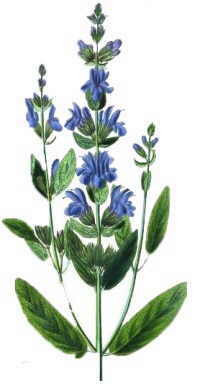
Medicinal benefits of sage
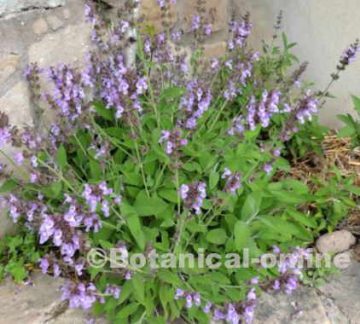
Sage, medicinal plant
Sage (Salvia officinalis) is a medicinal plant with antiseptic and antibiotic properties. Its infusion is digestive, carminative and antiemetic. Excellent against excessive sweating. Healing. Toning of the nervous system, to lower fever, menopause and other affections.
In general, sage has the same properties than Salvia verbenaca and Salvia pratensis, but with stronger values. This is the reason why, as we can see from its name, this is the one that has been mainly used as medicinal.
History of sage and the four thieves vinegar
Sage, together with rosemary, thyme and lavender have formed what it is traditionally known as “The four thieves vinegar“.
It is told that four thieves are caught in Toulouse while they were looting the neighbors’ houses affected by the Plague. They are condemned to death, but they are given the possibility of saving their lives if they discover what their secret is for having survived the Plague without being infected. Their secret was to macerate the four mentioned plants in vinegar and rub their body with it afterwards.
This story proves the main properties of all the Salvia: Their bactericide and vulnerary properties.
Sage, one of the best natural antibiotics
Sage has bactericidal properties that can be profited Against any kind the breathing diseases: cold , influenza, cough etc. Boil a spoonful of dry leaves and flowers per cup. Two cups each day.
It can be good for the treatment of food poisoning (Infusion of a teaspoon of dry plant per cup of water. 3 cups per day)
In external use, these disinfectant properties are used to heal ulcers and wounds (compresses of a 20g infusion of the dry plant or 50 / 100g of fresh plant per liter. Allow to cool and apply to the skin with a clean gauze)
Sage mouth rinses are useful in oropharyngeal infections (gargles with the previous decoction for the treatment of sore throat, pharyngitis, laryngitis, gingivitis, aphonia, wheezing, ).
Sage, a good remedy for the stomach
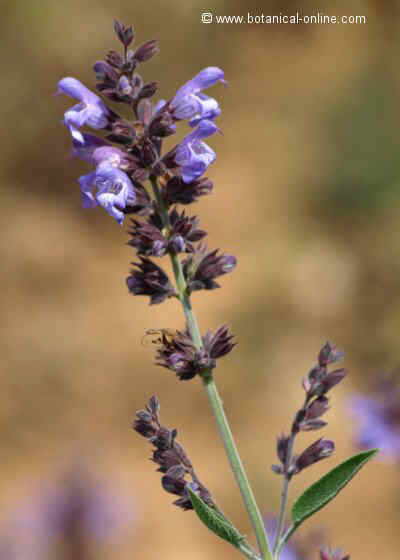
Sage infusion is a traditional remedy against heavy digestion, diarrhea, vomiting and colic. It has carminative, stomachic, anti-diarrheal, antiemetic, antispasmodic properties and prevents intestinal putrefaction. All this makes it suitable in the treatment of different digestive conditions:
- Stomachic, anti gastritic, astringent and anti-vomit: Against difficult digestions, gastritis, heartburn, hiatal hernia, diarrhea and vomits it is a good remedy to drink tree cups a day of the infusion of 15 gr. of dry leaves per litter of water.
- Nerves in the pit of the stomach: Sage helps other herbs reduce the sensation of nervous oppression in the upper part of the stomach. (Decoction for 20 minutes of a teaspoon per glass of water of the mixture in equal parts of leaves of linden, fennel, lemon balm , sage and yarrow. Take a couple of glasses a day)
Sage, one of the best antiperspirants
Like all sage, officinal sage is considered one of the best plants with antiperspirants properties and for these purposes it is widely used in menopausal women with hot flushes, both those that occur during the day and especially at night, which often aggravate insomnia .
Indicated for the natural treatment of hyperhidrosis (excess of sweating). A few hours after the intake of this infusion, excessive perspiration decreases (Infusion of 1 tablespoon of dried leaves per cup, 2-3 times a day). Foot baths can also be prepared for the bad foot odor caused by excess perspiration.
By means of reducing excessive sweating, sage is useful to combat body odor. (Infusion of a teaspoon of dried plant per glass of water Take a couple of glasses a day)
Sage for menstrual problems
Sage is considered a plant for women, since it has some effect to compensate for the hormonal changes that occur during climacteric and menopause. Sage reduces some symptoms of these stages such as hot flashes, excessive sweating, irritability, lack of libido, mood swings, …
- Emmenagogue: for amenorrhea, since it slightly reduces the pains of menstruation and facilitates emptying, avoiding the collateral problems that originates as pains decabeza, stomach, fluid retention and general irritability. (Infusion of a spoonful of flowering tops. 2 cups daily for one week before menstruation)
- Dysmenorrhea: In order to alleviate the pain produced by dysmenorrhea or irregular menstruations it is advisable to prepare mixed infusions to equal parts of Sage, Rosemary (Rosmarinus officinalis L.) and chamomile (Matricaria chamomilla L.) Take three cups per day until the pain diminishes
- Leucorrhoea: Sitz baths with salvia improve leucorrhoea or excessive vaginal discharge. It helps fight vaginal infections, in turn related to leucorrhoea. (Concentrated infusion of 20g of dry plant – or 50 / 100g of fresh plant per liter. Let cool and perform external vaginal irrigations)
Traditionally used in the natural treatment of vaginismus and frigidity.
Other uses of sage infusions
- Diabetes:Using it decreases the level of sugar. So, it should be taken by the diabetic people. The doctor has to be consulted because using this plant can modify diabetes medication. (Infusion of 1 tablespoon of dried leaves per cup, 2-3 times a day) (Cooking with sage) A traditional remedy is to take a small cup the day of maceration for 10 days of 100 gr. of leaves in a liter of Sherry wine (For the harmful effects of alcohol is not usually recommended)
- Alzheimer disease: In addition to its antioxidant properties, sage helps maintain acetylcholine. (Infusion of a spoonful of dried leaf per cup of water. A couple of cups a day)
- Febrifuge: It has been reported that sage infusions help reduce fever naturally. (Add a few sage leaves in infusions for cold, flu, etc.)
- Fertility: Due to its richness in zinc it can help to improve the production of testosterone (infusions of the floral tops, accompanying plants that increase testosterone such as ginger)
- Diuretic: Useful to treat cellulite or obesity (Infusion of a spoonful of dried plant per cup of water. 4 cups per day.)
- Irritable colon: It can be used to diminish the spasms and to reduce pain. (Infusion of about 15 grams of the root of the plant that is let to rest overnight)

External preparations with sage
Therapeutic uses of sage in external application
- Cicatrizant and bactericidal: (ulcers and wounds) To heal the ulcers, cuts, scratches, chafing, or any wounds, supporting the cicatrization and preventing wounds to become infected. Compresses with the maceration of dry leaves in white wine or the green plant applied directly on the wound. For mouth ulcers, dental caries or gingivitis infusion of half a tablespoon of dried herb for mouthwash. It is very useful for herpes treatment.Because of its bactericidal and cicatrizant properties, it can prevent scabies sores to become infected (Wash the affected areas with the infusion of the dried plant.) This preparation can be use to treat eczema.
- Cold sores: It is interesting to make an infusion of a tablespoon and a half of dry herb for the treatment of ulcers of the mouth (Perform mouth rinses or gargles with this preparation Do not swallow the liquid)
- Muscle relaxant: Very useful as a muscle relaxant, in pain caused by stretching or too great efforts without previous preparation. (Rub the sore area with a mixture of 10 drops of essential oil in two tablespoons of olive oil, do not drink the essential oil.) (Add 20 drops to the bath water, take a bath for 15 or 20 minutes) (Add to water of the bath the infusion of 3 spoonfuls of dry plant in a liter of water. take a bath during 15 or 20 minutes) This last remedy turns out to be very useful to fight insomnia, since, when we relax, we can conciliate better the sleep.
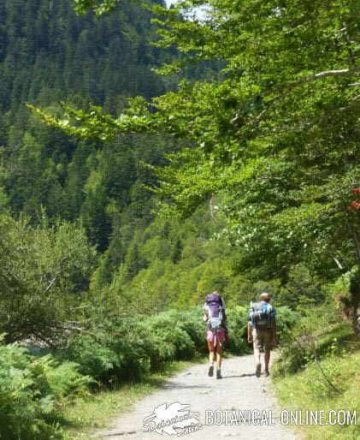
For hikers it is ideal to reduce inflammation, relax and rest their feet, after a long march (make an infusion of 50 grams of sage and 50 grams of rosemary and take a foot bath for 15 minutes.)
Other external remedies with sage
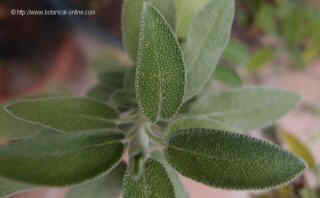
- Gum fortifier: With the wine maceration previously mentioned, we can rinse our mouth in order to fortify our gums. We can also use the green leaves to rub our teeth and gums to the same aim.
- Hair Lotion: To prevent dandruff or stop baldness, the infusion of this plant, together with those of rosemary and thyme invigorates your hair and makes it shine. For the treatment of dandruff you can use the following lotion: Mix 5 drops of sage oil with a teaspoon of almond oil and massage the head with your fingers in circular motions after having washed the hair. Sage can be used to prepare natural shampoos.
- Bad breath: for its bactericidal properties, it is adequate to kill bacteria that cause halitosis (Mouthwashes with the infusion of a spoonful of dried plant per cup of water)
- Backache or pain in the neck: Very useful as muscle relaxants in pain caused by stretching or straining too hard without prior preparation. (Rub the back or the cervicals with a mixture of 10 drops of essential oil in two tablespoons of olive oil. (Add 20 drops to bath water. Take a bath for 15 or 20 minutes) (Add to bath water the infusion of 3 tablespoons of dried plant in a liter of water. Take a bath for 15 to 20 minutes)
- Fibromyalgia: Very useful as muscle relaxants (Rub the painful area with a mixture of 10 drops of their essential oils in two tablespoons of olive oil) (Add to bath water Infusion of 3 tablespoons of dried plant in a liter of water. Take a bath for 15 or 20 minutes)
Cosmetic uses of sage
- The use of sage leaves infusion added to the bath water invigorates the skin and energizes the whole body.
- It is used in natural cosmetics for the production of cleansing creams.
- For the treatment of oily skin make a skin mask with the infusion of this plant diluted in a yogurt. (Two tablespoons of the infusion mixed with the yogurt, cool and apply on the face until it dries well, clean with cold water)
- Gray hair: This plant is used as one of the natural dyes for hair.
Cookery: Sage in the kitchen
It is very interesting to add some fresh leaves to our menus, specially on vegetables. apart from being more tasty, we take profit of the properties.
 More information on sage