Contents
- 1 Health benefits of tomatoes
- 2 MEDICINAL AND EDIBLE PROPERTIES OF TOMATOES
- 2.1 Tomato is one of the main foods rich in antioxidants in the diet
- 2.2 Lycopene: the antioxidant of tomatoes
- 2.3 Glutathione, another powerful antioxidant
- 2.4 Tomato prevents prostate cancer
- 2.5 Tomatoes to treat hypertension and fluid retention
- 2.6 REPLENISH FLUIDS AFTER EXERCISING WITH TOMATOES
- 2.7 Detoxifying vitamins in tomatoes
- 3 Aphrodisiac properties and other benefits of tomatoes
- 4 Toxicity and contraindications of tomato
- 5 TOMATOES NUTRITIONAL VALUE
Health benefits of tomatoes
MEDICINAL AND EDIBLE PROPERTIES OF TOMATOES
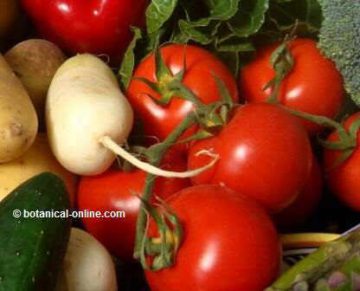
Tomato is one of the main foods rich in antioxidants in the diet
TOMATOES (Lycopersicon esculentum) are fleshy fruits suitable for those who want to adopt a healthy diet.
They present in their composition a series of elements very appropriate to detoxify the organism and to protect cardiovascular health.
Tomato is an important source of lycopene and glutathione, two antioxidants with properties to prevent certain diseases and that can prevent some types of cancer.
For these health claims, tomato is an essential fruit in any balanced diet, low fat diets, anti-cancer diet, etc..
People with gastritis, heartburn or peptic ulcer, should avoid consuming tomato since it can be irritating for the stomach mucosa.
Lycopene: the antioxidant of tomatoes
The first antioxidant component is called lycopene, a component to which tomato owes its red color.
This component has benefits similar to the beta-carotenes from carrots, as its anticancer properties.
Lycopene seems to reduce the probabilities of many cancers, such as those affecting the prostate , the lungs, the stomach, the bladder, and the uterus.
Studies have shown that this flavonoid stimulates bone formation. It is recommended for people with osteoporosis, menopause or to prevent bone fractures.
Lycopene appears in fresh tomatoes, but especially in cooked ones, since cooking helps liberate this element and facilitate its absorption by the organism.
Eating tomato in Ketchup or any other food cooked with tomato sauce can constitute a good way to take care of health, preventing cancer, or reducing cholesterol.
Glutathione, another powerful antioxidant
Glutathione has proved antioxidant properties that helps eliminate free radicals, responsible for the appearance of many illnesses.
This element, that appears with the biggest quantity in broccoli, is fundamentally in the skin of vegetables, so that we should eat tomatoes raw in salad. (Recipe: Tomato salad).
Glutathione is a very appropriate element in the elimination of the body toxins , especially of heavy metals that produce deterioration of the organism by accumulation. Tomato has been proved to help to eliminate lead efficiently. Other rich foods in this component are: garlic, potato, spinach, corn or portulaca.
Besides this properties, we should stand out its capacity to;lower blood pressure , to favor the good state of our liver or to prevent eczema.
Tomato prevents prostate cancer

These effects are due to the antioxidant potential of tomato. Lycopene and glutathione could join to the prostate tissue and they can probably reduce DNA damage in prostate tissue.Scientific studies have shown that tomato and tomate sauce protects against prostate cancer. These foods should be taken regularly in the diet to get the benefits of lycopene for prostate cancer prevention.
Tomatoes to treat hypertension and fluid retention
Tomatoes are very rich in;potassium. This mineral intervenes in the;regulation of the corporal liquids as well as in the good state of the nerves, the heart and the muscles. Together with ;calcium, potassium is very abundant in tomato.
Tomato is considered a good;stimulant since it has been proved that eating fresh tomatoes increases desire.
Because of its water content and its richness in minerals, tomato juice is suitable for the treatment of lost fluids and minerals caused by excessive heat. (Squeeze several tomatoes and drink the juice. Add a little salt)
REPLENISH FLUIDS AFTER EXERCISING WITH TOMATOES
Gazpacho recipe or tomato juice with a pinch of salt is very suitable for dehydration and to take in summer or in very hot days. It helps to replace fluids in the body because it contains electrolytes (minerals lost through sweat). The gazpacho prevents cramps that occurs in the legs or arms due to heat exhaustion. (Crush several tomatoes and drink the juice with a pinch of salt, unless you have hypertension). *Related information: Ketchup sauce |

Detoxifying vitamins in tomatoes
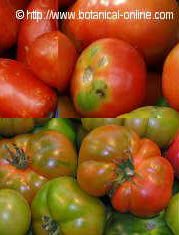
The beneficial components to detoxify the organism are vitamin C and vitamin A. Tomato is very rich in both of them.
Vitamin A was the first vitamin to be discovered in 1913. It helps the body to attain cellular growth, to maintain the bones and the teeth in healthy, it helps the immunologic system to combat infections, and protects against sight.
Vitamin C is a powerful antioxidant because it promotes the elimination of free radicals generated by the body itself, as well as those coming from abroad. It has been proven the ability of this element to remove pollutants that enter the body.
The ingestion or inhalation of products can cause serious health problems, especially to the liver, kidneys and nerves.
Vitamin C has a positive influence on the treatment of Alzheimer’s disease or other dementias, and in diseases such as fibromyalgia or multiple sclerosis.
Aphrodisiac properties and other benefits of tomatoes
Tomato is considered to be a good aphrodisiac since it has been proved that eating fresh tomatoes increases sexual desire.
It can aid cuts, scratches, scars or wounds of any type and to heal or lower inflammation. (Crush a tomato leaf and apply it as a poultice on the wound. The fruit also has similar properties, so you can apply tomato pulp on the wounds to remedy them.)
To prevent feet odor , you can apply a 20 minutes feet bath in a couple of liters of warm water in which a liter of tomato juice has been added.
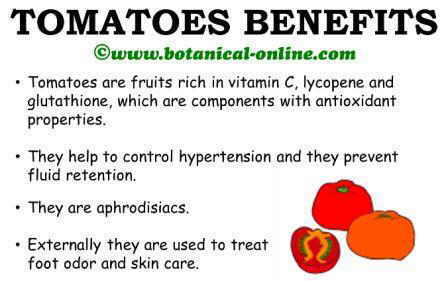
Summary of tomatoes main properties.
Toxicity and contraindications of tomato
The plant that produces tomatoes is a member of the Solanaceae family.. Like other species of this family, the whole plant is poisonous, other than its fruits, the tomatoes.
So you can not eat the stems, leaves or stems of the fruits not to become intoxicated. The effects are similar to those that occur when eating the potato plant (For more information on the toxicity of potatoes)
Tomato fruit is the only edible part of this plant with medicinal properties and outstanding food properties. However, must take into account a number of rules and possible complications when eating this fruit.
*More information about tomato toxicity, contraindications and side effects of tomato in the listing below.
TOMATOES NUTRITIONAL VALUE
Calories in tomatoes
Tomatoes, like all fruits, contain mostly sugar. But their sugar content is lower than the content of other fruits, and only contains 20 Kcal per 100g.
- Tomato is rich in vitamins and minerals that our body needs, such as vitamin C, lycopene and other antioxidants.
- The fruit is very present in the current Mediterranean diet (it was imported from the “New World”).
- It has a balanced sweet and sour taste, combined with a high content of glutamic acid, that enhances the flavor of the dishes. For these reasons, tomato and tomato sauce play a key role in stir-fries, sauces and culinary preparations in the Mediterranean cuisine.
- The tomato is recommended for obesity, because it is a vegetable with very few calories.
- In the diet of children, is an excellent vegetable to accompany your meal, because it gives them the vitamins they need to grow and has a color and a flavor that children love.
| NUTRITION FACTS OF TOMATOES PER 100G. | ||
| Ripe fresh | Ripe tinned natural | |
| Water (g.) | 93, 76 | 93, 65 |
| Calories (Kcal.) | 21 | 19 |
| Fat (g.) | 0,33 | 0,13 |
| Protein (g.) | 0,85 | 0,92 |
| Carbohydrates (g.) | 4,64 | 4,37 |
| Fiber (g.) | 1,1 | 1 |
| Potassium (mg.) | 223 | 221 |
| Phosphorus (mg.) | 24 | 18 |
| Magnesium (mg.) | 11 | 12 |
| Calcium (mg.) | 5 | 30 |
| Vitamin C (mg.) | 19 | 14,2 |
| Vitamin A (UI) | 623 | 595 |
| Vitamin E (mg.) | 0,38 | 0,32 |
| Niacin (mg.) | 0,628 | 0,73 |
| NUTRITION FACTS OF TOMATOES PER 100G. | ||
| Ripe tinned boiled | Juice natural | |
| Water (g.) | 91 | 93, 9 |
| Calories (Kcal.) | 28 | 17 |
| Fat (g.) | 0,13 | 0,06 |
| Protein (g.) | 0,95 | 0,76 |
| Carbohydrates (g.) | 6,78 | 4,23 |
| Fiber (g.) | 1 | 0,4 |
| Potassium (mg.) | 238 | 220 |
| Phosphorus (mg.) | 20 | 19 |
| Magnesium (mg.) | 12 | 11 |
| Calcium (mg.) | 33 | 9 |
| Vitamin C (mg.) | 11,4 | 18,3 |
| Vitamin A (UI) | 541 | 556 |
| Vitamin E (mg.) | 0,38 | 0,91 |
| Niacin (mg.) | 0,71 | 0,67 |
 More information about tomato benefits.