Contents
- 1 Health benefits of elder tree (Sambucus nigra L.)
- 1.1 INTERNAL USE REMEDIES WITH ELDER
- 1.2 Elder for respiratory diseases
- 1.3 Elder as a depurative and diuretic plant
- 1.4 Properties of elder flowers for urinary infections
- 1.5 Other uses of elder flower infusions
- 1.6 Traditional uses of bark and elder leaves: not recommended for their toxicity
- 1.7 Be careful with the bark and leaves !!!
- 1.8 EXTERNAL USE PREPARATIONS WITH ELDER FLOWERS
- 1.9 Elder, one of the best bactericides and anti-inflammatories
- 1.10 Edible properties of elder fruits
- 1.11 Cosmetic uses of elder
- 1.12 Is elder a safe plant?
Health benefits of elder tree (Sambucus nigra L.)
INTERNAL USE REMEDIES WITH ELDER
Elder for respiratory diseases
Elder is very helpful against respiratory diseases. Flowers in infusion become a good sudorific, which contributes to heal this kind of processes. It appears in many ethnobotanical treaties, used as pectoral and febrifuge infusion
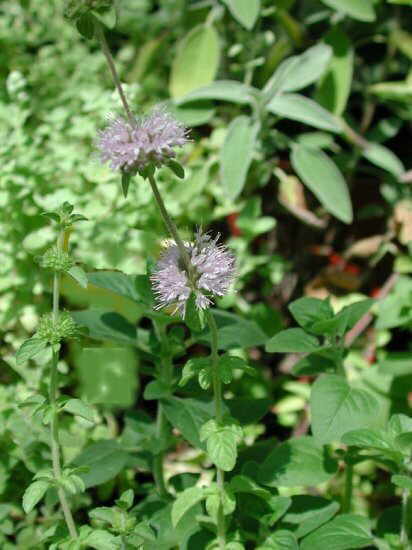
For all this, elderberry is a very useful infusion against respiratory problems, especially to relieve coughs or reduce the fever that accompanies flu, cold or bronchitis. (Infusion of 1 teaspoon of elder flowers per cup. 3 cups a day. It can be combined with lemon balm, mint, herb louise , eucalyptus, thyme, rosemary or other expectorants)
Elder as a depurative and diuretic plant
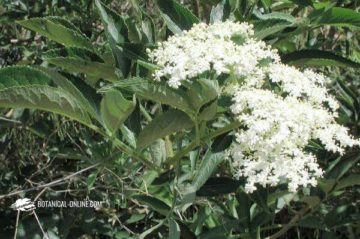
Elder flowers are one of the most effective suforifers and diuretics of phytotherapy, due to their content in potassium salts. It helps to reduce fever and increases fluid elimination.
Very used in gout (to eliminate uric acid), dropsy, obesity and rheumatism, to favor the elimination of liquid and toxins. (Infusion of 1 teaspoon of elder flowers per cup. 3 cups a day)
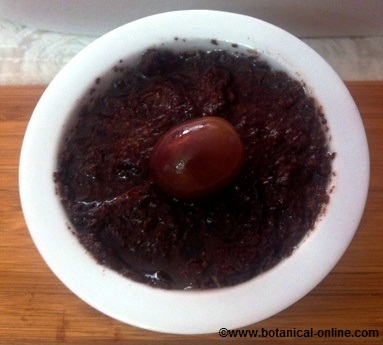
It has got a depurative effect for the body, being suitable to get rid toxins from our body. It can be used for psoriasis, urticaria, eczema, etc. (Infusion of flowers. A flower tablespoon per cup.) (Fruit in jam)
Properties of elder flowers for urinary infections
Elder flowers are rich in potassium salts and have a marked diuretic effect eliminating sodium and chloride.
With them diuretic infusions are used to:
- Urinary infections: Increased urination favors the healing of urinary infections. Complementary to medical treatment.
- Stones in the kidneys (Mixed infusion of half a teaspoon of the mixture in equal parts of elder flowers and combine with stonebreaker (Phyllanthus niruri). Drink 2-3 cups a day)
- Inflammation of the kidneys: (Mixed infusion of half a teaspoon of the mixture in equal parts of elderflower, linden and horsetail stalks. Drink a couple of cups a day) The bark has also been widely recommended for the same purposes, although currently It is not recommended for toxicity reasons.
Other uses of elder flower infusions
The pleasant aroma of elder flowers makes it used for many herbal teas, in combination with other herbs, to accompany or improve the flavor. In some texts it is described that the infusion of flowers is a galactogenic remedy, to stimulate breastfeeding.
Traditional uses of bark and elder leaves: not recommended for their toxicity
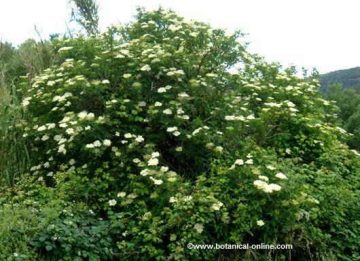
The traditional bibliography on the medicinal use of this plant includes some remedies with bark, leaves and immature fruits. In addition to reports on the presence of toxic components, poisonings (in humans and veterinarians) have been described, so the following remedies are NOT recommended.
The bark and leaves are used with diuretic, purgative and anti-edematous properties:
- Laxative and purgative properties: Although the decoction of a spoonful of dried leaves per glass of water has been used for this same purpose, it is not recommended to take preparations with elder leaves for internal use due to their toxicity. Elderberry has been used against constipation (Ripe fruits eaten raw or in marmalade. The fruits, if they are not very ripe, are toxic !!!) (The infusion of the fresh leaves was formerly recommended for constipation).
- Hepatic properties: To combat liver diseases, it has been recommended to drink a fasting glass of the decoction for 15 minutes of fresh leaves in ½ liter of water. As with the bark, it has been shown that preparations with leaves in internal use have too much toxicity, so they are totally discouraged.
Be careful with the bark and leaves !!!
The decoction of the bark and the infusions of elderberry leaves have a great diuretic value, that’s why it has been traditionally used to remove excess water accumulated in the body – fluid retention, rheumatism, etc. The decoction of the second bark or liber bark (phloem) has been a fairly common remedy in these conditions, as collected by numerous ancient treaties.
However, more recent studies have shown the extreme toxicity of elder bark , so preparations with bark or elder leaves should not be taken in any preparation for internal use. It is safer to use other diuretic plants such as garlic or horsetail.
EXTERNAL USE PREPARATIONS WITH ELDER FLOWERS
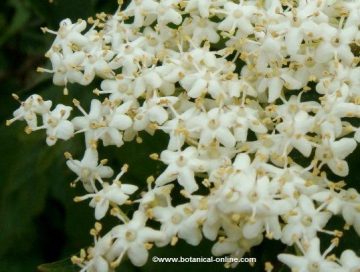
- Antiseptic and bactericide: The same decoction seen above can be used for buccal rinsing against pyorrhea and gingivitis. (Rinsing with an infusion of 25gr of flowers per half liter of water. Do not swallow the liquid)
- Otitis: If we introduce the steam resulting from the decoction of a handful of dried flowers in our ear, we will notice improvement in the earache.
- Pharyngitis: Gargle with the infusion of 20 gr. of dried flowers per liter of water.
- Astringent: To treat hemorrhoids apply the lotion with the juice extracted squashing fresh leaves. For nose bleeding , there is a traditional remedy to stop nosebleeds consisting of crushing dry leaves and applying the powder. Not recommended given the toxicity of the plant.
- Urticaria: Elder flowers can be used in anomalies such as hives.
- As a natural collyrium: It has been a traditional remedy for what has been called “evil eye”. Very useful in case of conjunctivitis, cataracts or retinal detachment (Make eye washes with the infusion of a handful of flowers per liter of water. Apply a gauze over the eyes). (Do not use in case of allergic conjunctivitis or hay fever)
Elder, one of the best bactericides and anti-inflammatories
- To cure or disinfect cuts or burns: apply a cataplasm of fresh leaves on the affected area.
- Hair care: Besides having bactericidal properties, elder possesses anti-baldness properties so it can help stop hair fall. It can be used to prepare natural shampoos.
- For foot pain: Boil 10 grams of leaves per liter of water. Perform foot baths
- For otitis, earache, tinnitus, hearing loss, Meniere’s disease or swimmer’s ear: ( The following remedy was used in the past. Due to the toxicity of elder leaves in NOT longer recommended) . It was performed by introducing the steam in our ear resulting from the decoction of a handful of dry leaves. (The process was done by the vaporization method, which consisted on the application of a vapor for therapeutic use. This was done in practice in the following way: Boiling a handful of leaves in a liter of water for 10 minutes. Removing from heat and, while being hot, placing a cone made of paper or cardboard over the steam. Finally, they introduce the narrowest end in the ear and the widest end over the steam so that the steam could go into the ear.)
Edible properties of elder fruits
The fruits of elderberry should only be consumed when they are ripe. They have a high content of sugars, citric acid, malic acid, antioxidant polyphenols and vitamins, among which vitamin C, A and some B vitamins (pyridoxine and niacin) stand out.
Cosmetic uses of elder
- A flower infusion poured in the water of the bath makes it very refreshing, besides contributing to cure skin faults, such as pimples, blisters, inflammations, etc.
- To eliminate face spots: Apply on it the infusion of a handful of flowers in 1 and a half litters of water.
- Gray hair: The berries of this plant are used as one of the natural hair dyes.
- Perfume: the flowers are kept dry in clothes bags and can be used as an air freshener inside the house. Normally they have been used to perfume the rooms of the sick.
- Skin care: Flowers can be used to make skin cleansing creams.
Is elder a safe plant?
Elder is a very dangerous plant whose toxicity must be very-well known before using it as food or as a medicinal plant.
 More information on elder